

A gallery wall is a curated collection of multiple artworks arranged as one unified installation, while a single statement piece is one large focal artwork commanding an entire wall. The gallery wall vs single statement piece decision shapes your room’s emotional tone, visual complexity, and personality more than almost any other decorating choice. A single piece delivers calm, bold simplicity and suits smaller or minimalist spaces. A gallery wall delivers layered storytelling and creative energy, fitting medium to large rooms where personality takes center stage. Room size, ceiling height, budget, and the feeling you want to evoke all determine which approach wins for your space.
1. What makes a single statement piece effective in home decor
A single statement piece works because it creates an immediate, unambiguous focal point. The eye lands on one place, the room feels anchored, and the visual noise disappears. That simplicity is a design tool, not a limitation.
Sizing is the most critical variable. A single artwork should span 60 to 75% of the width of the furniture below it for optimal visual balance. A six-foot sofa, for example, calls for artwork roughly 43 to 54 inches wide. Going narrower makes the piece look lost; going wider overwhelms the furniture.
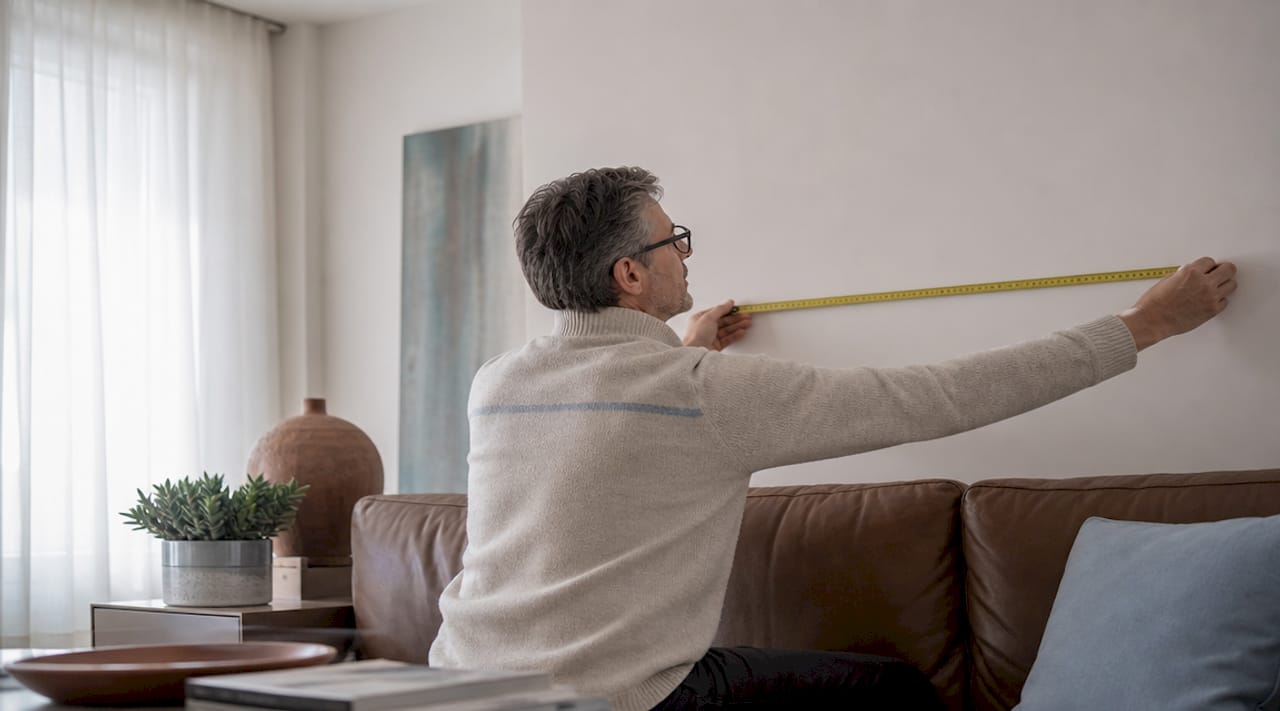
Placement follows a precise rule as well. Art positioned above furniture should hang 8 to 10 inches above the top edge to visually connect with the piece below. This spacing creates a relationship between the furniture and the art rather than leaving the artwork floating in isolation.
The emotional effect of a large single artwork is distinct. Large artworks create a calm, bold, and effortless feeling in a space. That quality makes single pieces the natural fit for minimalist, Scandinavian, and modern interiors where restraint is the design language. Works with strong gradients, bold color contrasts, or expansive abstract compositions perform especially well at large scale.
Practical advantages reinforce the aesthetic ones:
- Installation time: roughly 20 minutes versus 2 to 4 hours for a gallery wall
- Cost: one framed piece is almost always less expensive than 5 to 9 framed pieces
- Renter-friendly: fewer wall holes mean less damage and easier move-out
- Updating: replacing one single piece costs less and takes less effort than reconfiguring an entire gallery wall
Pro Tip: Before buying, tape a paper template of your intended artwork size to the wall and live with it for 24 hours. You will immediately see whether the scale feels right for the room.
2. How a gallery wall transforms a room and its key design principles
A gallery wall is not a random collection of frames. It is a curated art installation that tells a story through the relationship between pieces. The arrangement, spacing, and mix of mediums all communicate something about the person who lives there. That storytelling capacity is the gallery wall’s defining advantage.
The same 60 to 75% width rule applies to the overall footprint of a gallery wall. The total spread of the collection should anchor to the furniture below it, not float independently on the wall. This keeps the arrangement grounded and prevents the display from feeling disconnected from the room.
Spacing between frames is the detail most people get wrong. Frames spaced 2 to 3 inches apart maintain visual harmony and read as a unified display rather than a scattered collection. Tighter spacing feels cluttered; wider spacing loses the sense of cohesion that makes a gallery wall work.
Composition matters as much as individual pieces. Gallery walls with 5 to 9 pieces with consistent spacing produce the most balanced and cohesive look. Fewer than five pieces can look sparse and unresolved. More than nine becomes difficult to arrange without visual chaos.
The emotional payoff of a well-executed gallery wall is rich. Gallery walls promote creativity, detail, and layered storytelling in a way a single piece cannot replicate. They work especially well in living rooms, dining rooms, hallways, and home offices where personality and conversation are part of the room’s purpose.
Pro Tip: Lay all your frames on the floor before touching the wall. Photograph the arrangement from above, then use that photo as your installation guide. This saves hours of repositioning and unnecessary holes.
Gallery walls also offer flexibility that single pieces cannot match. You can add a new piece from an artist you discover, swap out a print that no longer resonates, or gradually build the collection over months. That evolving quality makes a gallery wall feel alive in a way that a static single piece does not.
3. Gallery wall vs single statement piece: side-by-side comparison
The single piece vs gallery wall comparison comes down to five practical dimensions: installation effort, cost, visual impact, style fit, and refresh flexibility. Understanding each dimension helps you make a choice you will not regret in six months.
| Dimension | Single statement piece | Gallery wall |
|---|---|---|
| Installation time | ~20 minutes | 2 to 4 hours |
| Typical cost | Lower (one piece, one frame) | Higher (5 to 9 pieces plus frames) |
| Visual complexity | Low, bold focal point | High, layered and expressive |
| Best room size | Small to medium | Medium to large |
| Style fit | Minimalist, modern, Scandinavian | Eclectic, maximalist, transitional |
| Refresh ease | Simple and affordable | More complex and costly |
| Renter suitability | High (fewer holes) | Lower (multiple anchor points) |
| Emotional effect | Calm, bold, effortless | Creative, personal, storytelling |
Installation time is a real differentiator. A single piece takes roughly 20 minutes to hang correctly, while a gallery wall demands 2 to 4 hours of planning, measuring, and adjusting. That gap matters if you are decorating a rental or frequently moving.
Cost compounds over time. Most homeowners refresh their art every 3 to 5 years. Replacing one statement piece is a straightforward transaction. Replacing or reconfiguring 7 framed pieces involves significantly more time and money, which is worth factoring into your initial decision.
Visual impact favors different goals. A single piece wins when you want one bold, undeniable focal point. A gallery wall wins when you want the wall itself to be a conversation, a reflection of accumulated taste and experience. Neither is objectively superior. They serve different design intentions.
4. How to choose between a gallery wall and a single statement piece
The right choice between these two approaches depends on four variables: room size, existing decor style, how much maintenance you want to do, and the feeling you want the room to produce.
Choosing between gallery walls and single artworks should be driven by the feeling you want to evoke rather than trends. That principle cuts through most of the confusion. Ask yourself: do you want the room to feel calm and focused, or expressive and layered?
Room size gives you a practical starting point:
- Small rooms under 15 square meters: a single piece in the 24 to 31 inch range works better than a gallery wall, which can feel cluttered in tight spaces
- Medium rooms: either approach works; your style preference and ceiling height determine the better fit
- Large open-plan rooms: large open-plan spaces often benefit more from gallery walls, which add warmth and a sense of inhabitation that a single piece alone may lack
Ceiling height influences scale. High ceilings support taller single pieces or vertically stacked gallery arrangements. Standard 8-foot ceilings work best with horizontal gallery layouts or modestly sized statement pieces that do not compete with the ceiling line.
Lighting shapes perception. A single piece under a dedicated picture light or track light becomes a gallery-quality focal point. A gallery wall benefits from even ambient lighting so no single frame dominates or disappears into shadow.
Budget is a real constraint. If you are starting from scratch, a single statement piece from an artist you genuinely connect with is almost always the better investment. You can always build a gallery wall around it later, using the original piece as the anchor. Starting with one strong work from Agostudio’s curated art prints gives you a foundation that grows with your collection.
Key takeaways
The most effective approach to choosing wall art is to match the visual complexity of your display to the emotional function of the room.
| Point | Details |
|---|---|
| Size rule applies to both | Artwork or gallery wall should span 60 to 75% of the furniture width below it. |
| Small rooms favor single pieces | Rooms under 15 square meters read better with one proportional artwork than a busy gallery wall. |
| Gallery walls need 5 to 9 pieces | Fewer looks sparse; more becomes hard to arrange cohesively with consistent spacing. |
| Installation time differs significantly | A single piece takes about 20 minutes; a gallery wall requires 2 to 4 hours of planning and hanging. |
| Lead with feeling, not trends | Choose the format that produces the emotional atmosphere you want, not the one currently popular online. |
What I have learned from watching people decorate their walls
I have seen more gallery walls go wrong than right, and the reason is almost always the same. People start with the format instead of starting with the feeling. They see a beautiful grid of frames on a design blog and immediately want to replicate it, without asking whether that level of visual energy actually suits their room or their personality.
My honest preference leans toward single statement pieces in most residential spaces, particularly in bedrooms and smaller living rooms. The calm that a single well-chosen large artwork produces is genuinely hard to replicate with a collection. A piece like Agostudio’s Abstract Landscape on a clean wall does more for a room’s atmosphere than six smaller prints competing for attention.
That said, gallery walls earn their place in social rooms. A dining room or a wide hallway with a thoughtfully built collection of 6 to 8 pieces tells a story about the people who live there in a way that no single artwork can. The key word is thoughtfully. Random accumulation is not a gallery wall. It is clutter with frames.
The advice I give most often: start with one piece you genuinely love, hang it correctly, and live with it. If the wall still feels incomplete after a month, you have your answer. If it feels right, you have saved yourself hours of installation and hundreds of dollars in frames.
— DAVID
Find your perfect piece at Agostudio

Agostudio curates original artworks from real artists, selected specifically because they transform a room rather than simply fill a wall. Whether you are building a gallery wall from scratch or searching for one bold statement piece to anchor your living room, the collection covers both needs with works that carry genuine emotional weight. Flexible sizing options mean you can find the right scale for any space, from a compact bedroom to a wide open-plan living area. The Artist Print Club is particularly useful for gallery wall builders who want to grow their collection gradually with curated monthly selections. Browse the full range of art prints and find the work that makes your wall feel like yours.
FAQ
What size should a single statement piece be above a sofa?
A single artwork should span 60 to 75% of the sofa’s width and hang 8 to 10 inches above the top of the sofa back. For a standard 84-inch sofa, that means artwork roughly 50 to 63 inches wide.
How many pieces does a gallery wall need?
A gallery wall with 5 to 9 pieces with consistent 2 to 3 inch spacing between frames produces the most balanced and cohesive result. Fewer than five can look unfinished; more than nine becomes difficult to arrange without visual confusion.
Is a gallery wall or single piece better for a small room?
A single piece in the 24 to 31 inch range works better in small rooms under 15 square meters. A gallery wall in a tight space tends to feel cluttered and visually overwhelming.
Which option is easier to update over time?
A single statement piece is easier and less expensive to update. Most homeowners refresh their art every 3 to 5 years, and replacing one piece requires far less effort and cost than reconfiguring an entire gallery wall.
Does a gallery wall work in a minimalist interior?
A gallery wall can work in a minimalist interior if the pieces share a tight color palette and consistent frame style, but a single statement piece is the more natural fit. Minimalist design favors focused attention over layered complexity.