

Supporting independent artists means becoming a deliberate patron who builds sustainable creative careers through consistent financial engagement, community advocacy, and strategic amplification. The difference between a fan and a true supporter is the shift from passive consumption to recurring patronage that provides artists with predictable income. Platforms like Patreon and Ko-fi have made this shift accessible to anyone with $5 a month. Community models like micro-grant programs and rotating retail exhibits have extended that impact into neighborhoods. This supporting independent artists guide covers every dimension of that engagement, from discovery to direct purchase to local advocacy.
How to find independent artists worth supporting
Discovery is where most people stall. The internet is enormous, and without a clear method, you end up cycling through the same algorithmically promoted names rather than finding artists whose work genuinely moves you.
Digital platforms are the most efficient starting point. Bandcamp functions as both a discovery engine and a direct sales platform, letting you hear full albums and buy them in the same session. Artist social media accounts on Instagram and TikTok offer unfiltered access to process, personality, and new work. Following an artist’s email list is underrated: newsletters cut through algorithmic noise and signal that an artist takes their career seriously.
Local channels offer a different kind of discovery. Community galleries, open studio events, and micro-grant showcases put you in the same room as the work. The Futuremakers Club in St. Louis, for example, awarded $250 grants to five artists selected from 23 applicants, then promoted those artists through public events. Attending those events is free, and the exposure to emerging talent is genuine.
When evaluating whether an artist is worth sustained support, look for consistency over novelty. An artist posting regularly, engaging with their audience, and developing a recognizable body of work is building something real. Viral moments are not a reliable signal of quality or longevity.
- Search Bandcamp by genre and location to find artists outside your existing network
- Attend local gallery openings, pop-up markets, and micro-grant showcases
- Follow artists on multiple channels, then subscribe to their email list for direct access
- Check whether local businesses participate in rotating art programs like Local Walls in Fairfield, CT
- Ask artists directly what they are working on. The conversation itself builds the relationship
Pro Tip: When you find an artist you connect with, spend 10 minutes exploring their full catalog before buying anything. Understanding their range makes your eventual purchase more meaningful and your word-of-mouth more credible.
What are the most effective ways to financially support artists?
Independent artists function as micro-entrepreneurs who need predictable income to reinvest in their craft, cover production costs, and avoid burnout. One-time purchases help, but they do not provide the financial floor an artist needs to plan six months ahead.
Recurring pledges on Patreon or Ko-fi at $5 to $10 per month are the single highest-impact action a supporter can take. That amount feels small individually, but 200 supporters at $5 each generates $1,000 per month in reliable income. That is the difference between an artist keeping their studio and giving it up. The predictability matters as much as the total amount.
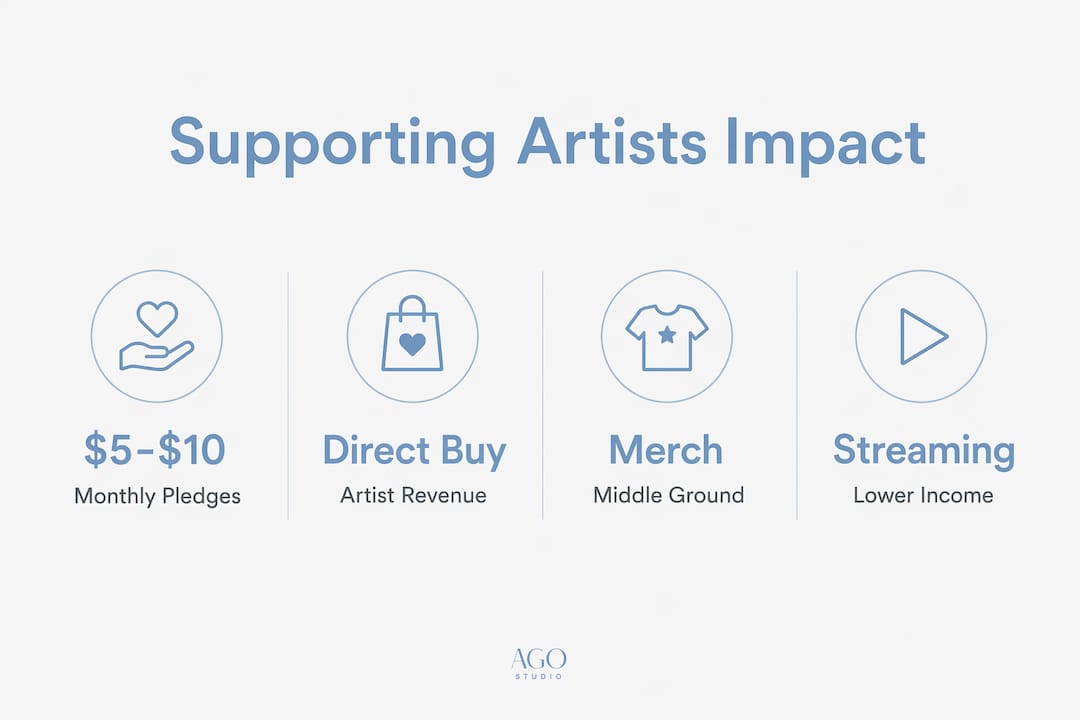
Direct purchases from artist-run platforms beat streaming by a wide margin. Buying directly on Bandcamp during Bandcamp Fridays, when the platform waives its revenue share, puts the maximum percentage of each sale into the artist’s hands. Streaming royalties, by contrast, generate fractions of a cent per play. An artist needs tens of thousands of streams to earn what a single album purchase delivers.
| Support method | Artist revenue impact |
|---|---|
| Monthly Patreon pledge ($5–$10) | Predictable income; compounds with subscriber count |
| Direct Bandcamp purchase | High per-sale revenue, especially on Bandcamp Fridays |
| Streaming (Spotify, Apple Music) | Fractions of a cent per stream; minimal direct income |
| Merchandise purchase | Strong margin; supports production and brand building |
| Print club subscription | Recurring revenue tied to physical artwork delivery |
Merchandise and digital downloads sit in the middle ground. They are one-time transactions, but they carry better margins than streaming and create a physical or tangible connection to the work. Print club subscriptions, where a supporter receives new artwork each month, combine the recurring revenue model with the merchandise benefit.
Pro Tip: If you can only do one thing financially, set up a $5 monthly pledge on Patreon or Ko-fi for one artist you believe in. Cancel anything else if you need to. Consistency beats size every time.
How can you promote indie artists without spending money?
Moving beyond passive streaming to active promotion is one of the most underused tools available to supporters. Sharing a track with a personal endorsement, rather than a bare link, tells your network why the work matters. That context converts listeners far more effectively than an unaccompanied post.
The mechanics of promotion matter more than most people realize. Algorithms on Instagram and TikTok weight early engagement heavily. Commenting within the first hour of a post going live increases its reach significantly. Adding an artist’s track to a public Spotify playlist exposes it to your followers and signals engagement to the algorithm. These are free actions that take under two minutes each.
Here is a practical sequence for amplifying an artist you want to support:
- Follow the artist on every platform they use actively, not just the one you prefer
- Turn on post notifications so you see new content early and can engage within the first hour
- Share their work to your own feed with a sentence explaining what you find compelling about it
- Add their music to at least one public playlist and tag the artist when you do
- Tag the artist in relevant conversations, not just promotional ones, to build authentic association
- Write a genuine review on Bandcamp, Google, or wherever the artist sells directly
- Recommend them by name when someone in your network asks for music or art suggestions
Consistent brand-building through loyal fan engagement creates more durable careers than viral moments. When you show up repeatedly for an artist, you become part of the community that sustains them. That is more valuable than any single share.
What do community-based support models look like in practice?
Local programs have developed some of the most practical and replicable models for helping indie musicians and visual artists gain exposure without the overhead of traditional galleries or venues.
The Futuremakers Club in St. Louis is a clear example. The program awarded micro-grants to emerging artists and connected them to performance and exhibition opportunities in the downtown area. The selection process was competitive, with five artists chosen from 23 applicants, which gave the program credibility and gave selected artists a meaningful credential. The public events tied to the grants created visibility that extended well beyond the grant amount itself.
The Local Walls program in Fairfield, CT, takes a different approach. Original works rotate through local businesses for 90-day periods at no cost to the artist. Customers scan QR codes to purchase directly. The program removes the gallery commission, puts the artist in front of foot traffic they could not generate independently, and gives businesses a reason to refresh their spaces regularly.
Programs like the Westfield Creative Collective demonstrate that retail spaces displaying rotating artwork attract more foot traffic while providing cost-effective exposure for emerging artists. Both sides benefit without either side carrying the full cost.
| Program | Model | Artist benefit |
|---|---|---|
| Futuremakers Club, St. Louis | Micro-grants plus public events | Cash grant plus community visibility |
| Local Walls, Fairfield CT | 90-day rotating retail display | Free exposure and direct QR code sales |
| Westfield Creative Collective | Retail partnership program | Foot traffic exposure and shared costs |
Getting involved is straightforward. Contact local business associations, arts councils, or chamber of commerce offices to ask whether similar programs exist in your area. If they do not, the Local Walls model is simple enough to propose: find three willing businesses, recruit five artists, and set a 90-day rotation schedule. You can also support local designers through retail and community methods that go beyond single purchases.
Key takeaways
Sustainable support for independent artists requires recurring financial commitment, direct purchasing habits, and active community participation rather than passive consumption.
| Point | Details |
|---|---|
| Recurring pledges over one-time buys | Monthly pledges of $5–$10 on Patreon or Ko-fi provide artists with predictable, plannable income. |
| Direct purchases maximize artist revenue | Buying on Bandcamp, especially during Bandcamp Fridays, delivers far more per sale than streaming. |
| Early engagement amplifies reach | Commenting and sharing within the first hour of a post significantly boosts algorithmic visibility. |
| Community programs create systemic exposure | Models like Local Walls and Futuremakers Club give artists access to audiences they cannot reach alone. |
| Treat artists as small businesses | Consistent, strategic support helps artists maintain ownership, avoid burnout, and grow sustainably. |
Why I think most people support artists the wrong way
Most people who care about independent art still default to streaming. They add an artist to a playlist, feel good about it, and move on. I understand the impulse. Streaming feels like support because it involves the music. But the economics make it nearly meaningless as a financial act.
What I have seen work, over and over, is the supporter who treats their relationship with an artist the way they would treat a small business they believe in. They buy directly. They show up to events. They tell specific people about specific work. They do not wait for an artist to go viral before paying attention.
The artists I have watched build real careers share one thing in common: a small group of consistent, vocal supporters who acted early. Not thousands of passive listeners. Dozens of people who bought the record, shared it with a real recommendation, and kept showing up. That is the model worth replicating.
There is also something worth saying about the art you bring into your home or workspace. Choosing a piece from an independent creator, rather than a mass-produced print, changes the object. It carries a story. It connects you to a person who made a deliberate choice about color, form, and meaning. That is not a minor distinction. It is the entire point of why art matters in a space.
If you want to go deeper on the collaboration side of this, the practical guide to artist collaboration from HRDLF is worth reading alongside this one.
— DAVID
How Agostudio makes it easy to support real artists
Agostudio curates original artworks from independent creators and makes them available as high-quality prints, so every purchase goes directly toward supporting the artists behind the work.
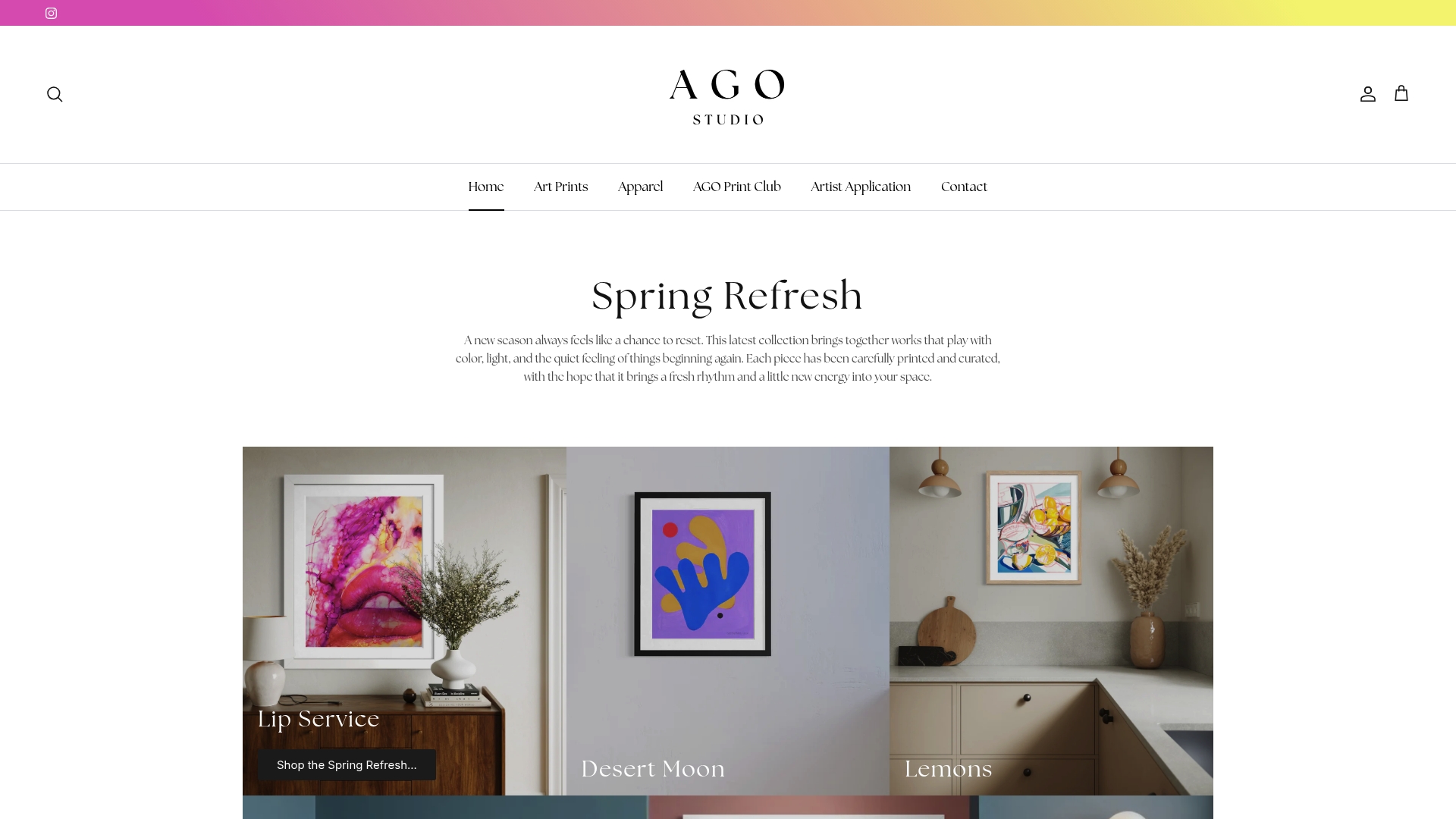
The Agostudio Artist Print Club is built on the same recurring patronage model this guide recommends. Subscribers receive exclusive prints on a regular schedule, giving artists predictable income while giving you a growing collection of meaningful work. Membership tiers start at an accessible entry point and scale up for deeper engagement. If you prefer to start with a single piece, the full art prints collection lets you browse curated works and buy directly. Either way, your purchase reaches the artist, not an intermediary.
FAQ
What is the most impactful way to support an independent artist financially?
Recurring monthly pledges of $5 to $10 on platforms like Patreon or Ko-fi provide the most sustainable financial support by giving artists predictable income they can plan around.
How does buying on Bandcamp compare to streaming?
Buying directly on Bandcamp, especially during Bandcamp Fridays, delivers significantly more revenue per transaction than streaming, which generates fractions of a cent per play.
How can I promote an indie artist without spending money?
Engage with their posts within the first hour of publishing, share their work with a personal recommendation, add their music to public playlists, and recommend them by name in relevant conversations.
What are community-based programs for supporting local artists?
Programs like Local Walls in Fairfield, CT, and the Futuremakers Club in St. Louis offer artists rotating retail exposure and micro-grants, connecting them to audiences and income without traditional gallery overhead.
Why does buying art from independent creators matter beyond the purchase itself?
Independent artists operate as micro-entrepreneurs, and direct purchases help them maintain creative ownership, cover production costs, and build careers without depending on intermediaries or corporate platforms.