

An art print series is defined as a cohesive group of related prints united by a shared theme, subject, or concept, produced as part of an artist’s intentional creative statement. The term appears constantly in galleries, auction houses, and online shops, yet most buyers treat it as decoration jargon rather than a meaningful distinction. Understanding what does art print series mean changes how you shop, display, and value art. This article breaks down the definition, the role of editions, the history behind the format, and what to look for when buying.
What does art print series mean, and how do editions fit in?
An art print series is a set of related prints conceived together, sharing compositional or conceptual links that reveal the artist’s intention more deeply than any single work could. The series format is not just an aesthetic choice. It is a structural one that shapes how meaning accumulates across multiple images.
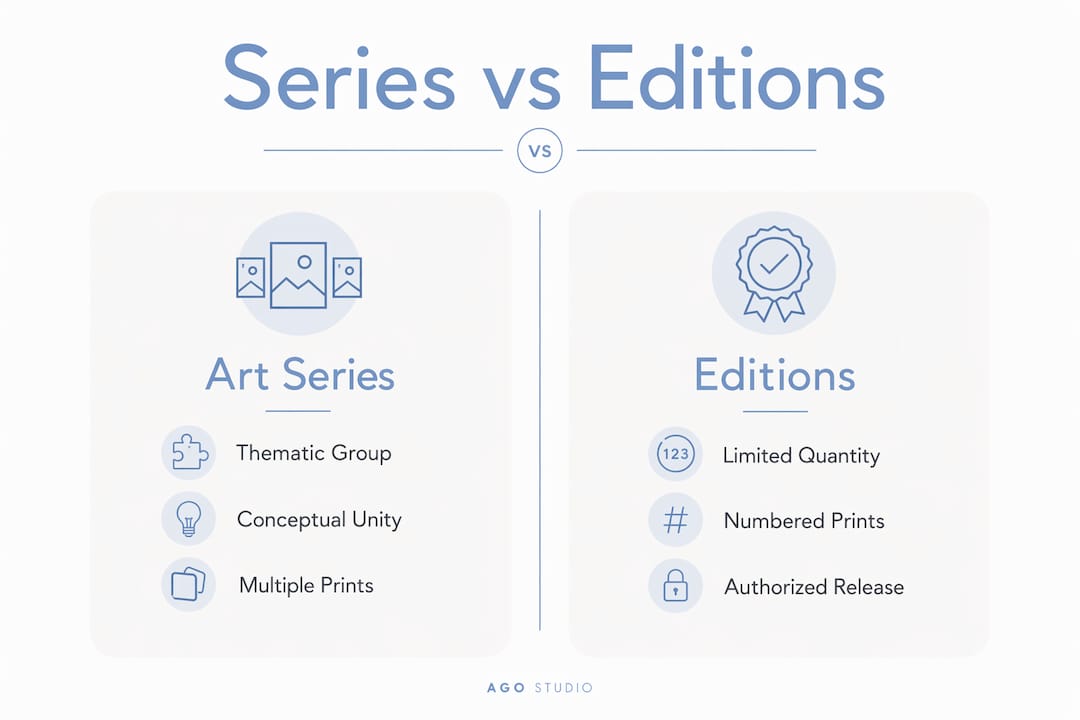
The word “edition” describes something different but closely related. An art edition is a limited, authorized release of a print, produced in a controlled quantity with the artist’s approval of both concept and production. A series can contain multiple editions, and each edition within that series has its own numbered run.
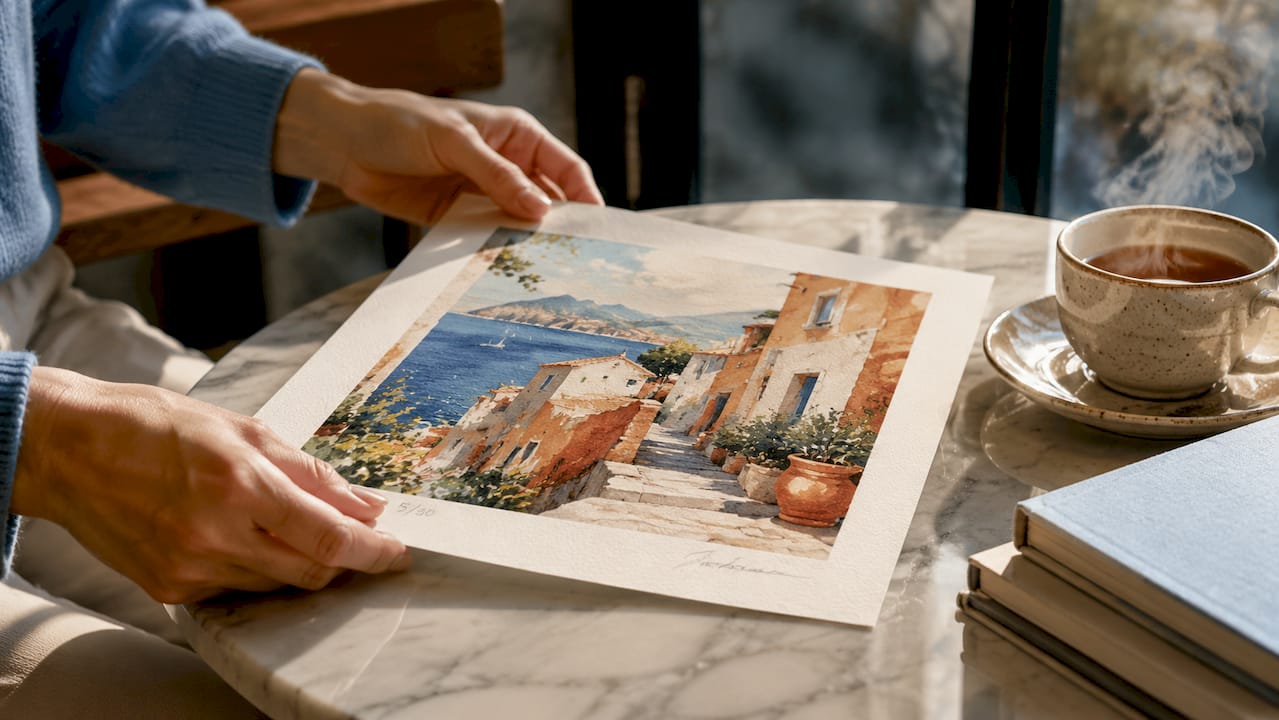
Edition numbers appear as fractions. A marking like 5/30 means the print is the fifth impression in a run of thirty. That denominator is the edition size, and it directly signals scarcity. Smaller edition sizes generally indicate greater rarity and, by extension, stronger collector interest.
Print series should never be confused with mass-produced commercial posters. Limited editions differ from open prints in that they follow specific, prescribed routes for sale and carry artist authorization that assures authenticity and value. A poster run of thousands shares nothing meaningful with a signed edition of thirty.
Common types of prints found in a series
- Lithographs: Prints made from a flat stone or metal plate, often used for fine art series with rich tonal range.
- Screenprints: Ink pushed through a mesh stencil, favored by artists like Andy Warhol for bold, graphic series.
- Woodblock prints: Relief prints carved from wood, the dominant format in Japanese print series traditions.
- Giclée prints: High-resolution inkjet reproductions on archival paper or canvas, widely used in contemporary limited edition series.
- Etchings: Prints made from acid-bitten metal plates, common in European fine art series from the 17th century onward.
Pro Tip: Check the back of any print for a pencil signature, edition fraction, and the series title. Ink-stamped signatures or printed numbers are signs of mass production, not a genuine limited edition.
How did the art print series format develop historically?
The series format has deep roots in both artistic ambition and commercial logic. Japanese woodblock printmaking offers the clearest early model. Japanese print series served as both an artistic format and a commercial structure, allowing works to be collected in installments over time. Publishers and buyers both benefited. Artists like Katsushika Hokusai and Utagawa Hiroshige built entire careers around series such as Thirty-Six Views of Mount Fuji and The Fifty-Three Stations of the Tōkaidō.
The series format historically supported artists’ creative growth and economic sustainability by challenging them to produce variations within a single concept. That constraint is productive. Working within a theme forces an artist to find new angles, new compositions, and new emotional registers across multiple works.
Western art followed a parallel path. Here is how the concept evolved across four key periods:
- Narrative series (16th–17th century): Artists like Francisco Goya used print series to tell sequential stories. Goya’s Los Caprichos and The Disasters of War are early examples of series as social commentary.
- Landscape and topographical series (18th–19th century): European printmakers produced series documenting cities, countryside, and monuments, sold as collectible sets to a growing middle class.
- Modernist seriality (early 20th century): Artists began using series to explore formal repetition and variation rather than narrative, treating the series as a laboratory for ideas.
- Contemporary limited editions (late 20th century to present): The rise of the art market formalized series as collectible products, with edition sizes, certificates of authenticity, and gallery representation becoming standard.
The economic benefit of the series format remains real today. Buyers can enter a collection at a lower price point by purchasing one print from a series, then build toward a complete set over time.
What should buyers look for in an art print series?
Collectors distinguish between two separate systems: “from the series” indicates conceptual grouping, while the edition fraction indicates scarcity within the authorized edition. Understanding both is the foundation of informed buying.
Reading edition markings
Edition markings including signatures, numbering, and proof designations are the primary documentation for collector confidence. A pencil signature from the artist confirms personal authorization. The edition fraction confirms scarcity. A proof designation, such as “A.P.” for artist’s proof or “T.P.” for trial proof, signals a print outside the standard numbered run.
Artist’s proofs and trial proofs are produced in small numbers during the printmaking process. They were originally quality control tools. Today they are recognized collecting categories, sometimes rarer and more coveted than standard edition prints.
Factors that affect value and authenticity
- Condition: Paper quality, absence of foxing or fading, and clean margins all affect value significantly.
- Provenance: A documented ownership history, including gallery receipts or certificates of authenticity, strengthens a print’s credibility.
- Edition size: Smaller runs carry more scarcity value. An edition of ten outranks an edition of five hundred in collector terms.
- Series completeness: Owning a complete portfolio from a series commands a premium over individual prints bought separately.
- Artist reputation: Prints from well-documented artists with exhibition histories carry stronger market value.
Pro Tip: Condition, provenance, and correct edition markings often matter more than buyers expect. Before purchasing any print for investment, request a certificate of authenticity and verify the edition details against the artist’s published catalog.
Comparison of print types and value signals
| Print type | Edition status | Key value signal |
|---|---|---|
| Signed limited edition | Numbered, artist-authorized | Edition fraction, pencil signature |
| Artist’s proof | Outside standard run, rare | “A.P.” marking, artist signature |
| Open edition print | Unlimited, no edition cap | No fraction, lower collectible value |
| Mass-produced poster | Commercial reproduction | No signature, printed number |
| Giclée limited edition | Numbered, archival materials | Certificate of authenticity, edition size |
How does understanding series improve your decor and collecting?
Viewing prints as a series deepens understanding of the artist’s intention far beyond color matching or surface decoration. A series carries narrative depth, thematic consistency, and a curated aesthetic experience that individual prints cannot replicate alone. That knowledge changes how you display and choose art.
For home decor, a series gives you a ready-made framework for a gallery wall design. Prints from the same series share palette, scale, and mood, so they work together without requiring design expertise to arrange. A single statement print from a series can also anchor a room while leaving room to add more pieces over time.
For collectors, the decision between buying single prints or complete sets is a strategic one. Collectors may buy single prints for decor appeal or complete portfolios for thematic coherence and investment. Knowing the difference guides your purchasing approach from the start.
Key ways that series knowledge shapes better decisions:
- Thematic coherence: A series tells a story across multiple works, giving your space a unified visual voice.
- Informed budgeting: Knowing edition sizes helps you prioritize which prints to buy first before an edition sells out.
- Emotional resonance: Series often explore a single subject from multiple angles, creating a richer emotional experience than a single image.
- Resale awareness: Complete series sets typically hold value better than individual prints purchased without context.
Key Takeaways
An art print series is a cohesive group of related prints produced under artist authorization, where the series defines the theme and the edition size defines the scarcity.
| Point | Details |
|---|---|
| Series definition | A series groups prints by shared theme or concept, revealing artistic intention across multiple works. |
| Edition numbering | Fractions like 5/30 show a print’s place in a limited run; smaller editions signal greater rarity. |
| Proofs and markings | Artist’s proofs and trial proofs sit outside the standard edition and can carry special collector value. |
| Series vs. mass prints | Limited edition series are artist-authorized and numbered; commercial posters carry no such documentation. |
| Buying strategy | Single prints suit decor goals; complete portfolios serve thematic coherence and long-term collecting. |
Why I think most buyers underestimate the series format
Most people walk into an art purchase thinking about color and size. That is understandable. But it means they miss the most interesting part of what a series actually does.
A series is not just a matching set. It is an artist working through a problem in public. Hokusai did not paint thirty-six views of Mount Fuji because he ran out of other ideas. He did it because the constraint forced him to find thirty-six different truths about the same subject. That is a fundamentally different kind of artistic ambition than producing a single showpiece.
The misconception I see most often is treating “limited edition” as a marketing phrase rather than a structural fact. When a buyer ignores the edition fraction, they lose the single most useful piece of information on the print. A 3/10 and a 3/500 are not the same object, even if they look identical on the wall.
My honest advice: buy the series you respond to emotionally first. Then learn the edition details. You will find that the two reinforce each other. The emotional pull deepens when you understand what the artist was building across the whole set. And the edition knowledge protects you if you ever decide to sell.
Art print series are not just for serious collectors with deep pockets. They are for anyone who wants their space to mean something beyond furniture arrangement.
— DAVID
Agostudio’s art print series collections
Agostudio curates original art prints with a focus on authenticity, artist authorization, and thematic depth. Every piece is selected to carry emotional weight, not just visual appeal.
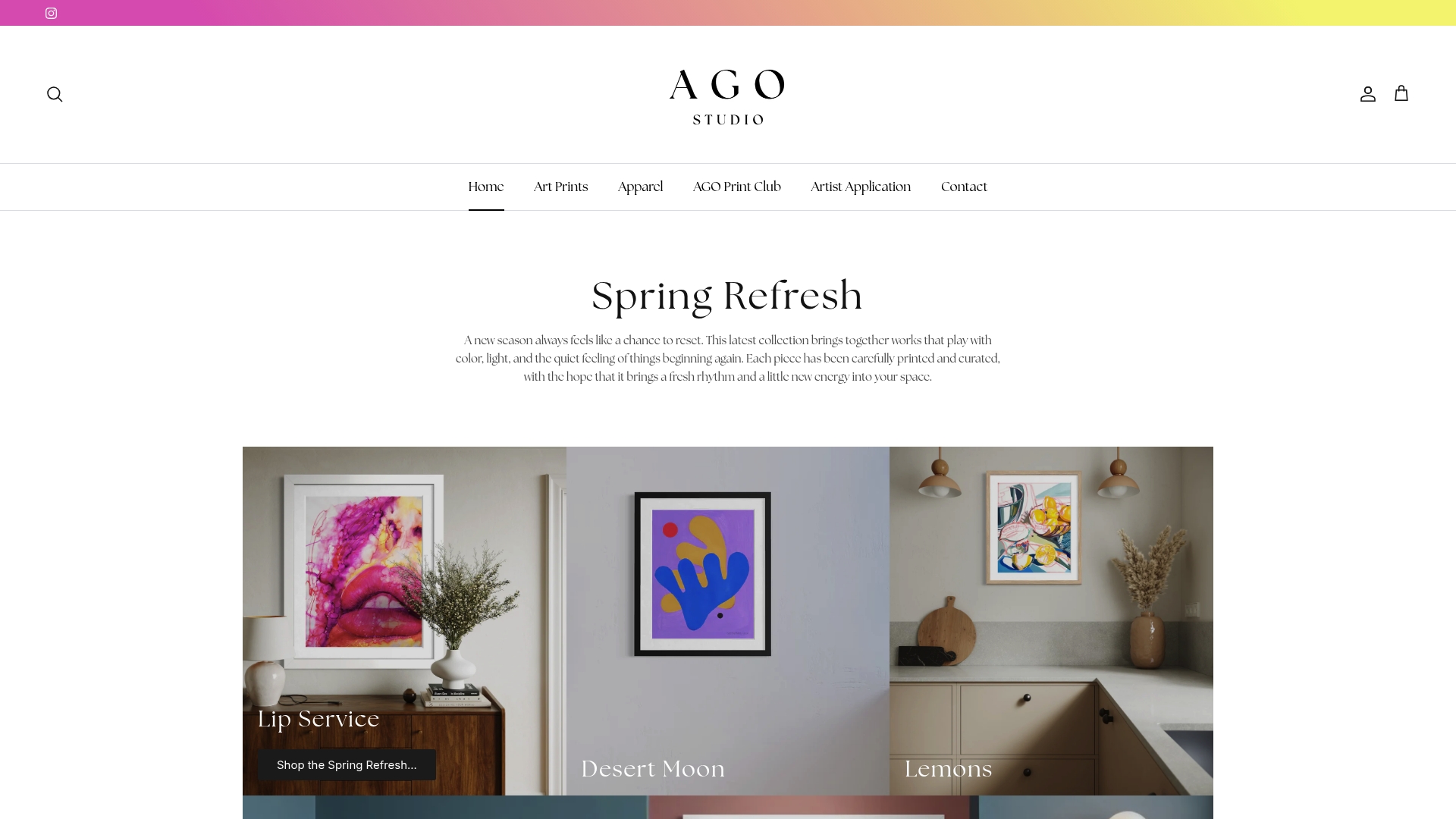
The Agostudio Artist Print Club offers curated, thematic sets that function exactly as a true print series should: works connected by concept, produced in limited quantities, and chosen to build a coherent collection over time. Whether you are decorating a single room or building a long-term collection, Agostudio connects you directly with real artists and editions that hold meaning. Browse the full range and find the series that speaks to your space.
FAQ
What is an art print series?
An art print series is a group of related prints conceived as a set, sharing a common theme, subject, or concept. Museum definitions describe a series as works related compositionally or conceptually that reveal the artist’s intention more deeply than a single print.
How is a series different from an edition?
A series is a thematic grouping of prints, while an edition refers to the limited, authorized quantity of each individual print within that series. Both terms describe different aspects of the same work.
What do the numbers on a print mean?
Numbers like 5/30 indicate that the print is the fifth impression in a run of thirty. The denominator is the edition size, and a smaller number signals greater scarcity and typically stronger collector value.
What is an artist’s proof?
An artist’s proof is a print produced outside the standard numbered edition, marked “A.P.” and signed by the artist. Sotheby’s recognizes proofs as distinct collecting categories that can be rarer and more coveted than standard edition prints.
Should I buy one print or a complete series?
Buying a single print works well for decor goals, while purchasing a complete portfolio supports thematic coherence and long-term collecting value. Knowing your purpose before you buy makes the decision straightforward.