

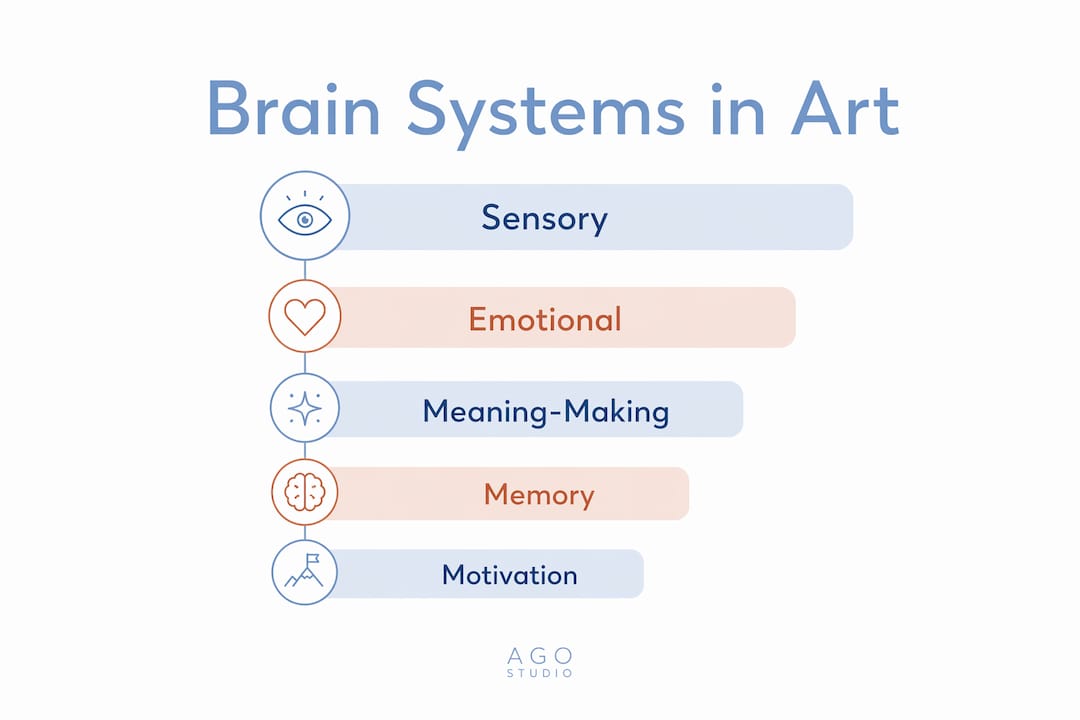
Art feels personal because it activates three brain systems at once: sensory processing, emotional valuation, and meaning-making connected to your own history. This is not a matter of taste or mood. Neuroaesthetics research and Self-Determination Theory both explain why art feels personal in ways that are predictable, measurable, and deeply tied to who you are. The same painting can move one person to tears and leave another unmoved. That gap is not random. It is the result of your brain linking what you see to your memories, values, and psychological needs in real time.
Why art feels personal: the brain’s three-system response
The personal impact of art starts in the brain, not in the gallery. Neuroaesthetics research describes what scientists call the “aesthetic triad”: three parallel systems that fire together when you encounter a work of art.
The three systems work like this:
- Sensory-motor system: Processes color, texture, line, and form. This is the first layer of response, happening before conscious thought.
- Emotion-valuation system: Assigns reward or aversion. This is why certain images feel good or threatening before you can explain why.
- Knowledge-meaning system: Connects the artwork to your personal history, cultural knowledge, and autobiographical memories.
The third system is where art becomes yours. Two people can stand in front of the same abstract landscape and have their meaning-making systems pull in completely different directions. One person sees a childhood coastline. Another sees grief. Personal resonance with art is structured by prior experiences and meaning-making, not random taste.
“The brain does not experience art as a neutral object. It experiences art as a mirror held up to everything you already carry inside you.” — Smithsonian Magazine, 2026 neuroaesthetics report
How psychological needs shape your emotional connection to art
The emotional connection to art goes beyond brain wiring. It connects to motivation. Self-Determination Theory, developed by psychologists Edward Deci and Richard Ryan, identifies three core psychological needs: autonomy, competence, and relatedness. Art fulfills all three when you engage with it on your own terms.
A 2026 Frontiers in Psychology study modeled a direct pathway from aesthetic perception to psychological need fulfillment to improved well-being. The key finding: art improves well-being when it is internally needed, not just passively perceived. This distinction matters. Scrolling past art on a screen is perception. Choosing a piece for your wall because it moves you is need fulfillment.
The study also found that openness to experience predicts both art-related aesthetic perception and the depth of psychological need fulfillment. People who actively seek new experiences get more from art, not because they are more sensitive, but because they engage more fully. That engagement is what shifts art from perception to need, aligning with Self-Determination Theory’s motivational model.
Pro Tip: When choosing art for your home, ask yourself which piece you keep returning to mentally, not just which one looks good in the room. That internal pull is your psychological need system signaling genuine resonance.
The practical implication is clear. Art that you choose freely, that challenges you slightly, and that connects you to something or someone you value will always feel more personal than art selected for its color match or trend appeal.
Why personal histories make the same artwork mean different things
Agreement on beauty is moderate across people. Agreement on deeper emotional states is not. A study published in the Annals of the New York Academy of Sciences and analyzed by Psychology Today in june 2026 found that agreement on liking art sits around 0.43, while agreement on personal affective experiences like feeling calm or inspired drops to around 0.11. That gap is the space where personal history lives.
Here is what shapes that divergence:
- Autobiographical memory: A painting of a kitchen table may trigger warmth in one person and loss in another, depending entirely on what their own kitchen table meant.
- Emotional state at the time of viewing: The same artwork hits differently when you are grieving versus celebrating. Your current emotional state acts as a filter.
- Cultural and personal knowledge: Knowing an artist’s biography or the historical context of a work changes what the meaning-making system does with it.
- Expectations and prior exposure: Personal meaning in art depends on slow integration with your autobiographical background, not on universal symbolism.
This explains why art gifts feel personal in a way that other gifts rarely do. A piece chosen because it reflects someone’s specific memories or values bypasses the generic and lands directly in the meaning-making system. That is not sentiment. That is neuroscience.
How art supports emotional processing and access to your true self
Art does more than reflect your inner world. It actively processes it. A University of Haifa model published in 2026 proposes that art facilitates four key emotional processing functions: meaning-making, emotional awareness, acceptance, and memory consolidation. These are not passive effects. They build over time as you return to a piece and your relationship with it deepens.

The table below contrasts two modes of engaging with art and their psychological outcomes:
| Mode of engagement | Psychological outcome |
|---|---|
| Passive viewing (scrolling, decorating by trend) | Surface aesthetic response, minimal emotional processing |
| Active, chosen engagement (selected for personal meaning) | Memory consolidation, emotional awareness, long-term well-being |
Cornell University research published in february 2026 adds another layer. The Cornell Chronicle report found that art provides access to the “true self” in a way that moral or rule-bound pursuits do not. Artistic self-expression is less constrained by social expectations, which makes it a more direct channel to authentic identity. This is why expressing personality through art feels different from expressing it through career choices or social roles.
Pro Tip: If a piece of art keeps pulling your attention back over days or weeks, do not dismiss that as indecision. That repeated return is your brain consolidating an emotional memory. Let it.
When art becomes part of your emotional regulation routine, it functions like a recurring conversation with yourself. The University of Haifa emotional processing model notes that memory reconsolidation and meaning-making continue long after the initial viewing. Art hung in a space you live in does not stay static. It grows with you.
How to cultivate a genuine personal connection with art
Personal connection with art is not accidental. It is built through specific habits of engagement. A 2026 Frontiers in Psychology paper describes aesthetic experience as an embodied, relational process. That means the environment you view art in, the attention you bring, and the social context all shape how personal it feels.
Practical ways to deepen your connection:
- Slow down in front of art you are drawn to. Give the meaning-making system time to do its work. Most people spend under 30 seconds in front of a painting. That is not enough for autobiographical integration to begin.
- Reflect on what the piece reminds you of. Not what it “means” in an art history sense, but what it pulls from your own life. That reflection activates the knowledge-meaning system deliberately.
- Place art where you spend time, not just where it looks good. The embodied aesthetic experience depends on repeated, situated encounters. A piece in your home office or bedroom works on you daily in ways a piece in a hallway never will.
- Share art with people who matter to you. Relatedness is one of the three core psychological needs. Discussing a piece you love with someone you trust deepens its personal significance. Art that builds community also builds personal meaning.
- Choose art that reflects your values, not current trends. Trend-driven choices satisfy the sensory system briefly. Value-driven choices engage the meaning-making system for years.
Personal art creates belonging, both within yourself and in the spaces you share with others. The science supports what most people already sense: the right piece on your wall is not decoration. It is a daily conversation with your own history.
Key takeaways
Art feels personal because the brain’s meaning-making system links what you see directly to your autobiographical memories, psychological needs, and emotional state, making every art experience uniquely yours.
| Point | Details |
|---|---|
| Three brain systems drive personal response | Sensory, emotional, and meaning-making systems fire together, making art feel tied to personal history. |
| Psychological needs determine depth of connection | Art fulfills autonomy, competence, and relatedness when chosen freely, not just passively viewed. |
| Personal histories create divergent meaning | Agreement on emotional responses to art is very low, proving personal experience shapes meaning far more than universal symbolism. |
| Art actively processes emotion over time | Meaning-making, memory consolidation, and acceptance build as you return to a piece repeatedly. |
| Environment and engagement habits matter | Placing art in lived spaces and reflecting on personal associations deepens its resonance significantly. |
What I have learned from years of watching people live with art
Most people underestimate how much their own history is doing the work when they stand in front of a piece they love. They credit the artist entirely. The artist created the conditions. You brought the meaning.
I have watched people walk past technically brilliant work without a second glance, then stop cold in front of something modest because it caught a light or a color that matched something buried in them. That is not mystical. That is the knowledge-meaning system doing exactly what the research describes. The artwork was a key. The lock was already inside them.
The mistake I see most often is choosing art for a room rather than for a life. A piece selected to match a sofa will never feel personal, no matter how beautiful it is. A piece selected because it makes you feel something you cannot fully name will still be working on you five years from now. That is the difference between decoration and art that supports mental health and genuine well-being.
My honest advice: stop asking whether a piece fits your space. Start asking whether it fits your story. The space will adjust. Your story is the only thing that cannot be replaced.
— DAVID
Original art that resonates, curated by Agostudio
Agostudio was built on exactly this premise: that the right piece of art is not the most expensive or the most trending. It is the one that connects to something real in you.
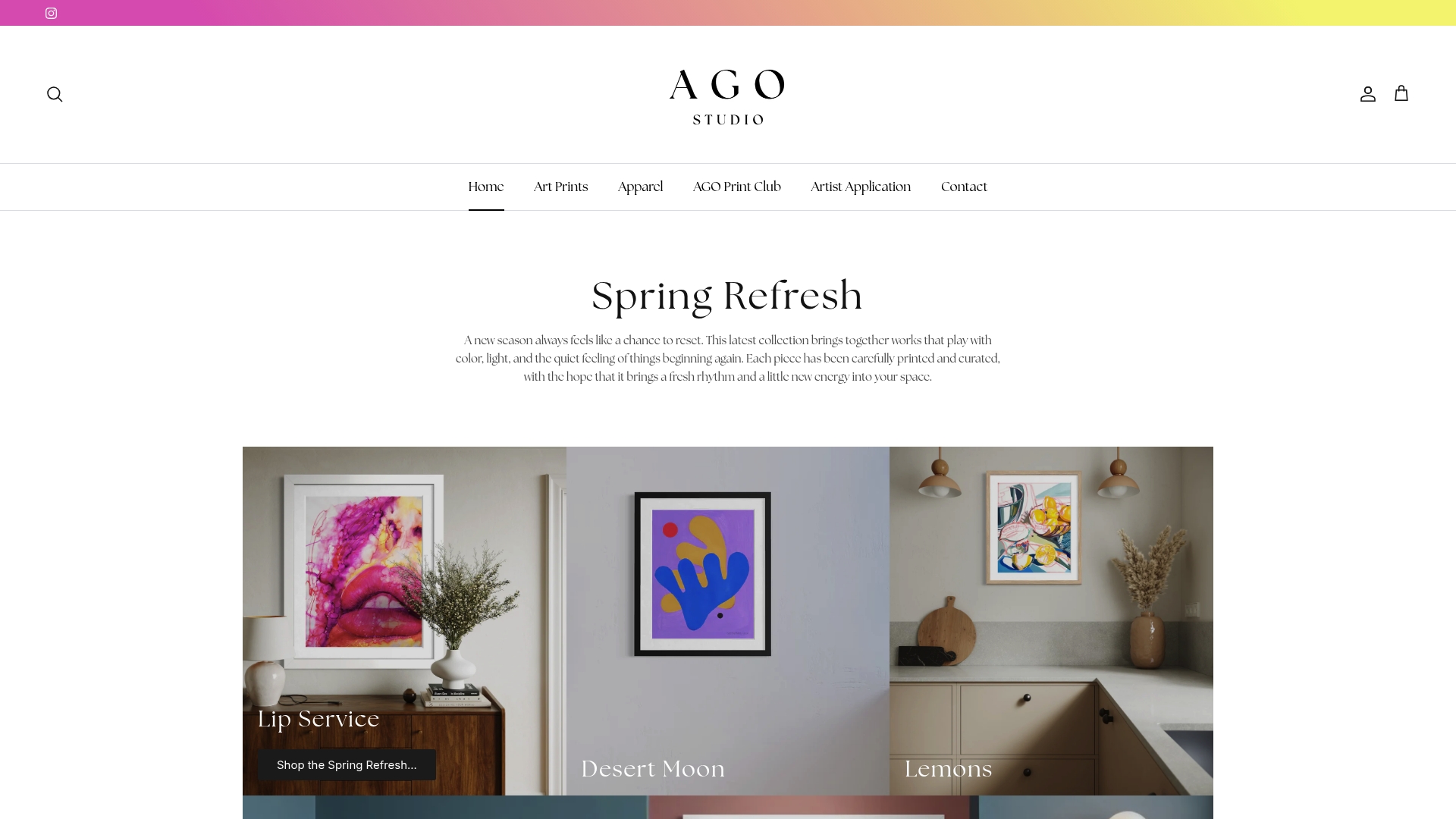
Agostudio’s art print collections are curated to evoke warmth, nostalgia, and authentic personal connection, not to fill walls but to start conversations with the people who live with them. Every piece is selected because a real artist made something true, and because that truth has a chance of matching yours. For readers who want ongoing access to new work that resonates, the Artist Print Club offers a way to keep that connection growing. Browse the collection and find the piece that already means something to you before you can explain why.
FAQ
Why does the same artwork feel different to different people?
The brain’s meaning-making system connects art to personal memories, values, and emotional state. Research shows agreement on personal affective experiences with art is very low, around 0.11, because each person’s autobiographical history shapes the response differently.
Why do art gifts feel more personal than other gifts?
Art gifts engage the recipient’s meaning-making brain system directly, linking the piece to their specific memories and values. A well-chosen artwork bypasses generic sentiment and lands in the part of the brain that processes personal identity.
How does art support emotional well-being over time?
Art facilitates meaning-making, emotional awareness, acceptance, and memory consolidation, according to a 2026 University of Haifa model. These effects build with repeated exposure, making art hung in lived spaces an ongoing emotional processing tool.
What is the aesthetic triad in neuroaesthetics?
The aesthetic triad describes three brain systems that activate together during art experiences: sensory-motor processing, emotion-valuation, and knowledge-meaning. The knowledge-meaning system is what connects art to personal history and makes it feel uniquely significant.
How can I choose art that will feel genuinely personal?
Choose art that triggers a memory, a value, or a feeling you cannot immediately name. Avoid selecting purely for trend or color match. Place the piece in a space you use daily, and give your brain time to integrate it with your own story.