

Accessible art is defined as artwork, programs, and spaces intentionally designed to remove barriers so people of all abilities can participate equally. The term covers physical access, sensory accommodations, and communication support. It sits within the broader art accessibility movement, which treats inclusion not as a courtesy but as a cultural right. With over 20% of the population identifying as disabled, the definition of accessible art carries real economic and social weight. This guide explains what accessible art encompasses, why it matters, and how artists and institutions can put it into practice.
What is accessible art and what does it actually cover?
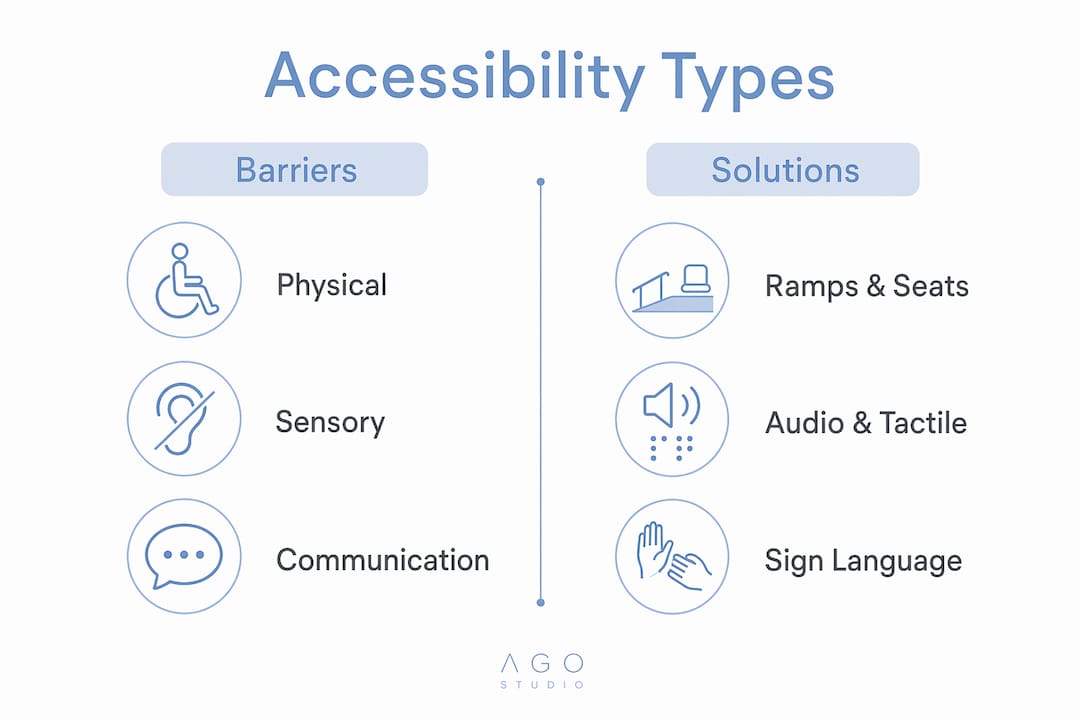
Accessible art removes physical, sensory, and communication barriers to give disabled individuals equal opportunity to engage with creative work. These three categories are distinct but work together. Removing only one still leaves people out.
Physical accessibility addresses the built environment. Ramps, wide doorways, lowered display cases, and seating throughout a gallery are standard starting points. Without them, a wheelchair user cannot enter the space, let alone experience the art.
Sensory accessibility addresses how art is perceived. Audio descriptions let blind visitors understand a painting’s composition and color. Low-stimulation rooms reduce sensory overload for autistic visitors or those with anxiety. Tactile art, where visitors can touch sculptural reproductions, gives people with visual impairments a direct physical connection to the work.
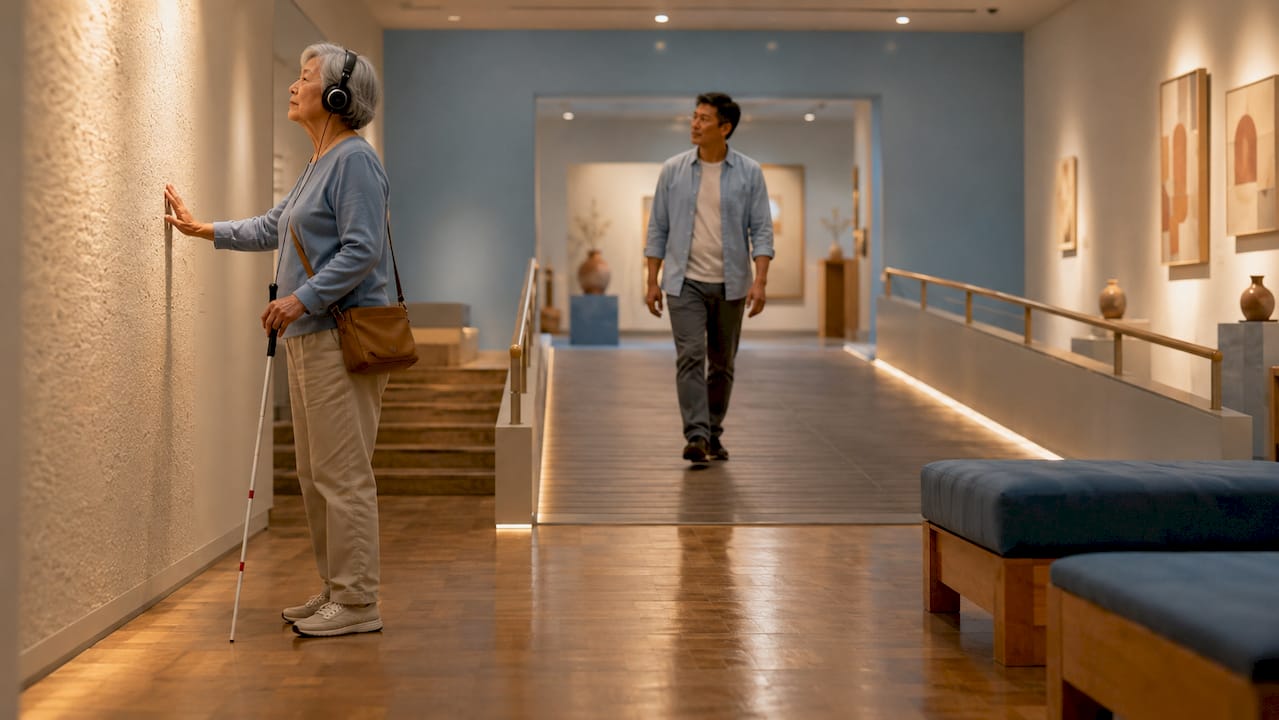
Communication accessibility addresses how information is shared. Sign language interpretation at gallery talks, plain-language wall text, and clear wayfinding signage all fall here. When institutions use dense academic language on labels, they exclude people with cognitive disabilities and many general visitors too.
| Accessibility type | Common barriers | Practical solutions |
|---|---|---|
| Physical | Steps, narrow doors, no seating | Ramps, wide doorways, rest areas |
| Sensory | Visual-only content, loud spaces | Audio descriptions, tactile models, quiet rooms |
| Communication | Jargon, no sign language | Plain language, ASL interpretation, clear signage |
Pro Tip: Start an accessibility audit by walking through your space as a first-time visitor with a mobility aid. You will spot barriers that staff who know the space well no longer notice.
Why is accessible art important culturally and economically?
The arts and disability sector contributed $67.4 billion to the Australian economy in 2023–2024. That figure shows that accessibility is not a charity gesture. It is a market reality. Institutions that exclude disabled audiences leave a significant portion of their potential audience outside the door.
Cultural equity is the deeper argument. Art builds community identity, shared memory, and social belonging. When disabled people cannot access galleries, theaters, or public art programs, they are excluded from that shared cultural life. That exclusion compounds other forms of marginalization. As the arts accessibility movement has argued since the 1970s, participation in culture is not a privilege. It is a right.
“Accessibility is not a special service. It is a core cultural value that determines who gets to belong.”
Attitudinal and communication barriers often exceed physical barriers in limiting access. A ramp at the entrance means nothing if staff treat disabled visitors as burdens or if programming never reflects disabled experiences. Organizational culture change and staff training are as necessary as architectural upgrades.
Art also builds community in ways that extend beyond the gallery. Research on why art creates conversation confirms that inclusive artistic spaces strengthen social bonds across different groups. Accessible art programs do not just serve disabled people. They make cultural spaces richer for everyone.
How did accessible art evolve from compliance to “radical access”?
The disability arts movement began in earnest in the 1970s and 1980s, driven by activists who demanded both physical access to cultural institutions and recognition of disabled artists as legitimate creators. Early wins focused on legal compliance, particularly after the Americans with Disabilities Act passed in 1990. The ADA set a floor, not a ceiling.
Compliance-only thinking produces the minimum. A ramp exists because the law requires it. Audio guides are offered because a checklist says so. This approach treats accessibility as a problem to solve once and then forget. Accessibility is a continual process requiring ongoing collaboration with disabled people, not a one-time checklist.
“Radical access” is the term now used to describe a fundamentally different philosophy. It treats accessibility as a core creative and cultural value, not a legal obligation. The Access Manifesto, a document developed within the arts accessibility movement, outlines an eight-point plan for this shift. Its central demand is that disabled and neurodivergent people lead accessibility decisions rather than being consulted after the fact.
The practical difference is significant:
- Compliance asks: “Does this meet the minimum standard?”
- Radical access asks: “Who is still being left out, and what do we change?”
- Compliance is a destination. Radical access is an ongoing commitment.
- Compliance centers the institution. Radical access centers the disabled visitor or artist.
Pro Tip: Invite disabled artists into the planning process before budgets are set. Retrofitting accessibility after a project is designed costs more and delivers less than building it in from the start.
Radical access shifts accessibility from a compliance exercise to a core cultural equity value. That shift unlocks new forms of creative participation that compliance-focused institutions never reach.
How can artists and institutions create accessible art?
The most effective accessible art programs start with lived experience. Engaging disabled artists and communities from the planning stage produces exhibitions and programs that work in practice, not just on paper. Walker Art Center in Minneapolis has documented this approach, showing that co-design with disabled communities produces more effective and more meaningful results than expert-led retrofitting.
Practical tools matter too. Simple, low-cost changes like tactile models, clear audio descriptions, and low-stimulation spaces significantly increase engagement. Tactile artist Jill Wells creates sculptural works specifically designed to be touched, giving blind and low-vision visitors a direct sensory experience of form and texture. Her work shows that accessibility can be a creative starting point, not an afterthought.
Accessibility infused from the start enriches learning for everyone by focusing on adaptable means rather than fixed outputs. This principle, central to accessible arts education, applies equally to galleries, public art programs, and studio practice.
Here are the core steps for creating accessible art experiences:
- Audit existing barriers. Map physical, sensory, and communication obstacles before designing solutions.
- Involve disabled people early. Co-design with disabled artists and community members, not just disability consultants.
- Use plain language. Rewrite wall text and program notes at a clear, accessible reading level.
- Add tactile and audio elements. Tactile models and audio descriptions serve blind visitors and enrich the experience for sighted visitors too.
- Train staff on attitude. Physical access fails if staff interactions are unwelcoming or patronizing.
- Evaluate and iterate. Collect feedback from disabled visitors after every program and use it to improve.
Accessible art education allows children with cortical visual impairment (CVI) and multiple disabilities to express ideas, build confidence, and experience joy through tailored art opportunities. Perkins School for the Blind has documented how adaptive teaching methods open creative expression for learners who are often excluded from standard art programs. The lesson for institutions is direct: when you design for the most excluded learner, you improve the experience for everyone.
Experts confirm that accessibility integrated into creative decisions activates new forms of conceptual participation beyond compliance. This is the creative argument for accessible art. It does not just include more people. It generates new ideas, new forms, and new audiences.
Pro Tip: Avoid treating accessibility features as separate add-ons. Audio descriptions written with genuine care become a new form of art writing. Tactile models become sculpture. The constraint produces creativity.
Key Takeaways
Accessible art is most effective when it is built into creative and institutional decisions from the start, not added after the fact.
| Point | Details |
|---|---|
| Definition of accessible art | Accessible art removes physical, sensory, and communication barriers to enable equal participation for all. |
| Three accessibility layers | Physical, sensory, and communication access must all be addressed for full inclusion. |
| Cultural and economic stakes | The arts and disability sector contributes billions to national economies, making access a market priority. |
| Radical access vs. compliance | Radical access treats inclusion as a core cultural value, not a legal minimum, and centers disabled leadership. |
| Practical starting point | Co-design with disabled communities from the planning stage produces better outcomes than retrofitting. |
Accessible art is not optional. It is the point.
The framing I find most useful is this: accessible art is not a modified version of “real” art. It is what art looks like when it takes its own stated values seriously. Art claims to speak to the human condition. If it cannot reach a fifth of the population, that claim is hollow.
What strikes me most about the radical access movement is how it reframes the creative conversation. Institutions that treat accessibility as a checklist produce ramps and audio guides that feel like afterthoughts. Institutions that treat it as a creative challenge produce work that is genuinely more interesting. The constraint of designing for a blind visitor forces a writer to describe color in terms of temperature, texture, and emotion. That is better art writing, full stop.
The attitudinal shift is harder than the physical one. A ramp can be built in a week. Changing the assumption that disabled visitors are edge cases takes years of deliberate organizational work. The types of artist collectives that lead on accessibility tend to be smaller, community-rooted organizations where disabled artists hold decision-making power. Larger institutions follow slowly, usually after public pressure.
My honest view is that the disability arts movement has already done the intellectual work. The Access Manifesto exists. The frameworks are clear. What remains is the will to implement them, and the humility to let disabled artists lead.
— DAVID
Agostudio and the art of meaningful access
Art that connects people starts with the decision to include them. Agostudio curates original works that carry genuine human warmth, the kind of pieces that spark conversation and make a space feel inhabited rather than decorated.
Agostudio’s art prints collection brings together works from real artists whose creative voices reflect a wide range of human experiences. For readers who want regular access to new artists and curated perspectives, the Agostudio Artist Print Club delivers original prints on a subscription basis. Each piece is selected because it resonates, not because it fills a wall. That standard of intentionality is the same one the accessibility movement asks of every cultural institution.
FAQ
What is the definition of accessible art?
Accessible art is artwork, programming, and spaces designed to remove physical, sensory, and communication barriers so people of all abilities can participate equally. It goes beyond legal compliance to treat inclusion as a core creative value.
Who benefits from accessible art?
Disabled people are the primary beneficiaries, but accessible art improves the experience for all visitors. Plain language, clear wayfinding, and tactile elements help older adults, children, and non-native speakers as well.
What is the difference between disability art and accessible art?
Disability art is art created by disabled people that reflects lived disability experiences. Accessible art is a broader concept covering any art, program, or space designed to be inclusive. The two overlap but are not the same thing.
What is “radical access” in the arts?
Radical access is a framework that moves beyond ADA compliance to treat accessibility as a cultural equity value. It centers disabled and neurodivergent people in leadership and decision-making roles rather than treating them as an audience to accommodate.
How can I make art more accessible?
Accessible arts education research shows the most effective approach is to involve disabled people from the planning stage, use plain language, add tactile and audio elements, and train staff to shift their attitudes alongside physical changes.