

Human experience in art is defined as the active cognitive and emotional process through which art expresses, shapes, and reflects feelings, identity, and meaning beyond what words can capture. This goes far beyond passive viewing. Cognitive science describes art as a site for negotiating meaning, emotion, and self-identity, with outcomes ranging from catharsis to intellectual growth. Philosophers like John Dewey and Theodor Adorno built entire theories around this idea. Understanding what does human experience in art mean requires looking at biology, psychology, and philosophy together, because no single lens captures the full picture.
How does art express and shape human emotion and identity?
Art is one of the most direct forms of emotional self-discovery available to human beings. Emotion theory holds that art transforms vague, private feelings into shareable forms, enabling communication at a purely affective level. The artist does not transmit a fixed message. Instead, creation itself is the process of understanding what one feels.
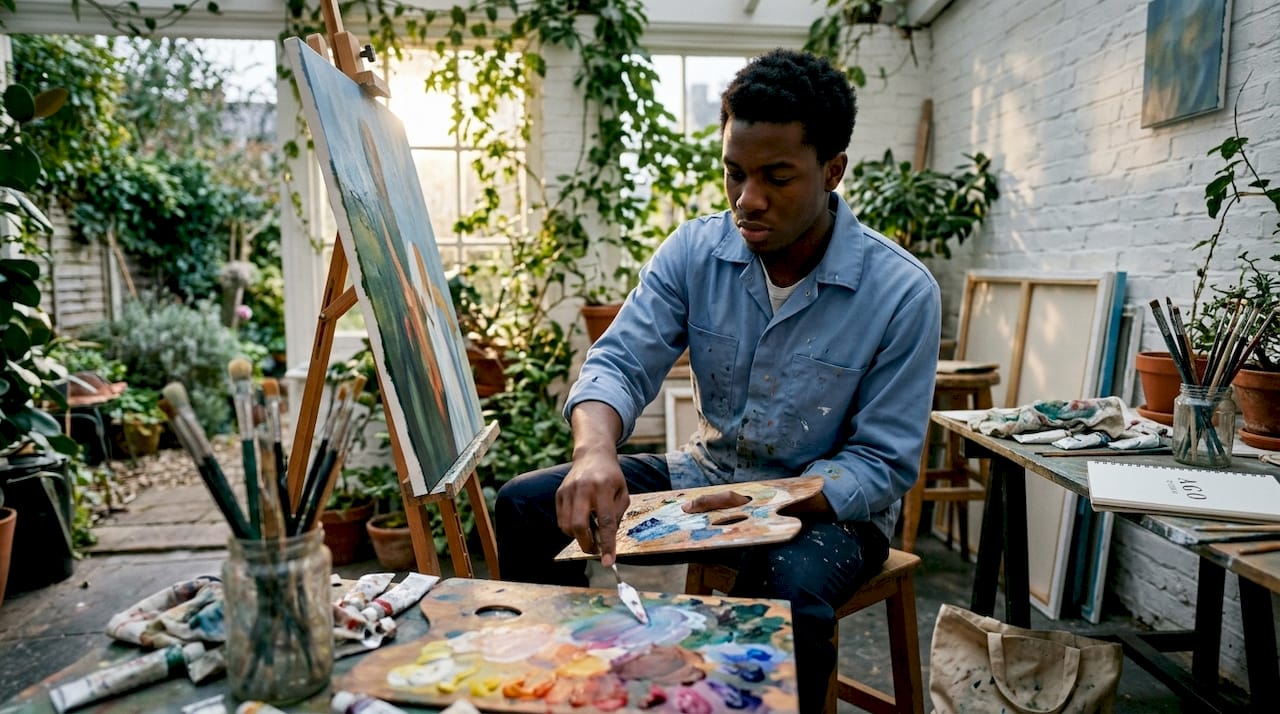
Cognitive science confirms that art evokes a wide spectrum of emotional responses in viewers. These are not surface reactions. They are deep, embodied processes that shape how you perceive yourself and others. Research shows art functions as a negotiation of emotion and self-identity, meaning the meaning of art in human experience is never fixed. It shifts with each viewer and each encounter.
Common emotions evoked through genuine art engagement include:
- Catharsis: A release of pent-up emotion, often triggered by tragedy or deeply personal subject matter
- Joy and wonder: Sparked by color, form, or unexpected beauty in works like Mark Rothko’s color field paintings
- Empathy: Activated when art portrays human suffering or connection, as in Käthe Kollwitz’s prints of grief
- Nostalgia: A bittersweet recognition of past experience, common in representational and figurative work
- Awe: The sense of encountering something larger than oneself, often found in landscape and abstract art
Art also shapes identity over time. Regular engagement with diverse art forms builds empathy and expands your sense of what human experience can look like. This is the role of art in emotional understanding: not just to reflect feelings back at you, but to introduce you to feelings you have not yet named.
Pro Tip: When you stand in front of a painting, resist the urge to read the wall label first. Let your body respond before your mind categorizes. The emotional data you collect in those first 30 seconds is the most honest signal you will get.
What is the evolutionary and cultural significance of art?
Art is not a luxury. Art-making dates back 2.5 million years among Pleistocene hominins, serving biological and social functions including group cohesion and parental bonding. That timeline places art at the foundation of what makes humans human, not as decoration added after survival was secured, but as a tool for survival itself.
This evolutionary origin explains why art is a universal human practice. Every known culture across history has produced visual art, music, narrative, and ritual. The forms differ radically. The impulse does not.
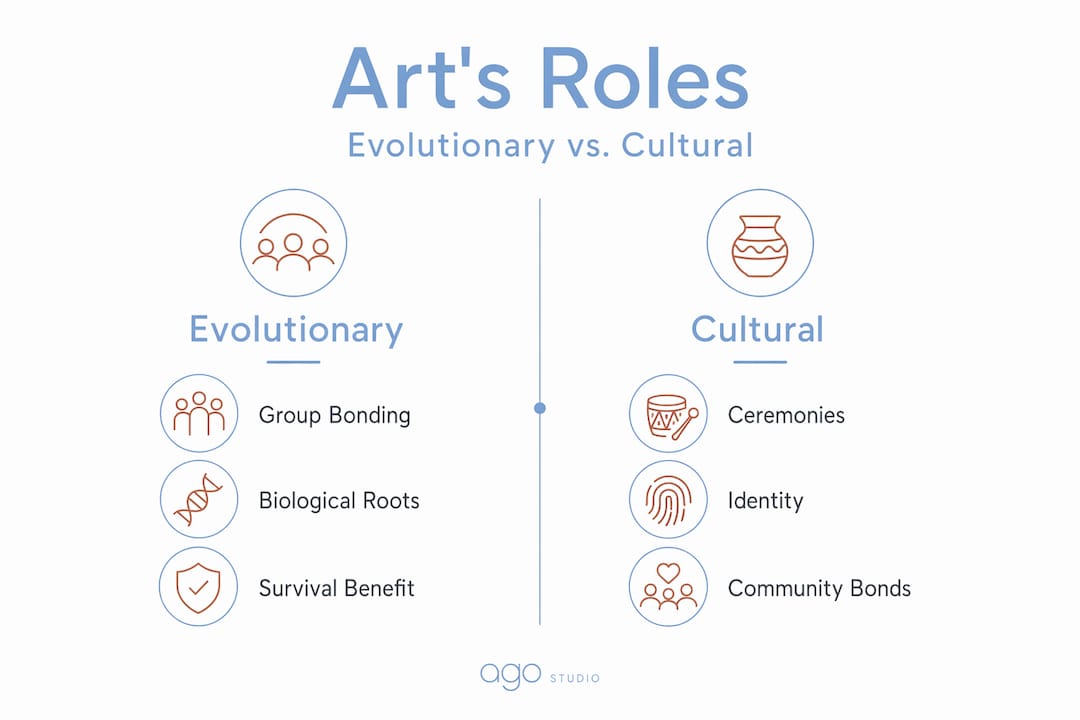
The table below shows how the evolutionary functions of art compare to its cultural roles in human societies:
| Evolutionary Function | Cultural Role |
|---|---|
| Group cohesion and bonding | Shared ceremonies, rituals, and collective identity |
| Parental care signaling | Storytelling that transmits values across generations |
| Emotional regulation | Art therapy and mental health practices |
| Mate selection and display | Aesthetic traditions and craft mastery |
| Environmental mapping | Landscape art and spatial storytelling |
Cultural practices use art to mark transitions, honor the dead, celebrate birth, and define community boundaries. Indigenous sand painting, Japanese Noh theater, West African textile traditions, and European oil painting all serve this function. The significance of art lies in its ability to hold collective memory and give communities a shared emotional vocabulary.
How art impacts human perception at the cultural level is equally striking. Societies that invest in public art and arts education consistently report stronger social trust and community identity. Art does not just reflect culture. It actively constructs it.
How does philosophy explain the human experience in art?
John Dewey argued that art emerges from ordinary experience, shaped through attention and active perception into meaningful forms. For Dewey, a painting is not separate from life. It is life organized into rhythms and resolutions that clarify what it means to be alive. This is a radical claim. It means every attentive act of perception is potentially aesthetic, and every piece of art is a distillation of lived experience.
Theodor Adorno pushed further. His aesthetic theory holds that art can judge the viewer, not the other way around. Aesthetic experience offers knowledge inaccessible by other means. When a work of art genuinely unsettles you, Adorno would say it is doing its job: reflecting social reality back at you in a form that demands a response.
Contemporary cognitive science adds a third layer. Research describes art as a proto-environment for meaning-making, a bounded perceptual and affective space that viewers mentally inhabit. You do not look at a painting from the outside. You enter it. Your senses, memories, and emotions integrate with the work to produce meaning that belongs to neither you nor the artist alone.
Key philosophical principles that define human connection through artistic expression:
- Art clarifies life rather than decorating it, per Dewey’s framework
- Art is dialectical, meaning it reflects social reality and challenges self-understanding, per Adorno
- Art functions as immersive space, not fixed language, per contemporary cognitive models
- Judging art through rational analysis alone bypasses deeper emotional resonance essential to the full experience
These perspectives converge on one point: art is not a passive object. It is an active participant in the construction of meaning.
How does engaging with art impact mental health?
Art engagement reduces stress, anxiety, and psychiatric symptoms through over 50 identified mechanisms, ranging from neurophysiological responses to social connection. That number is significant. It means art does not work through one pathway. It works through many simultaneously, which is why its effects are so consistent across different populations and contexts.
Creative arts participation enhances psychological resilience and positive mood, measured through both biological biomarkers and self-report data. The mechanisms include cortisol reduction, activation of the brain’s reward circuitry, increased oxytocin from social art-making, and the cognitive benefits of sustained focused attention. Art therapy is now used in clinical settings for trauma, depression, and chronic illness.
The practical implications for art enthusiasts are direct. Attending gallery openings, joining art studio events, or simply spending 20 minutes a week in focused looking produces measurable psychological benefits. You do not need to be an artist to receive them.
Art placement in your living space also matters. Research on environmental psychology shows that art in your home affects mood, focus, and sense of personal identity. A single well-chosen piece in a room you use daily functions as a recurring emotional anchor.
Pro Tip: Choose art for your home based on emotional response, not style trends. Ask yourself: “Does this piece make me feel something I want to feel regularly?” That question will serve you better than any design rule.
Key takeaways
Human experience in art is an active, multidimensional process that shapes emotion, identity, and perception through cognitive, evolutionary, philosophical, and psychological mechanisms.
| Point | Details |
|---|---|
| Art is active, not passive | Genuine engagement requires mental inhabitation of the work, not just observation. |
| Emotion and identity are core | Art transforms private feelings into shared forms, shaping how you understand yourself and others. |
| Art has evolutionary roots | Art-making dates back 2.5 million years, confirming it as a biological and social necessity. |
| Philosophy deepens the experience | Dewey and Adorno show art clarifies life and challenges self-understanding in ways other media cannot. |
| Mental health benefits are measurable | Art engagement reduces stress and builds resilience through more than 50 documented mechanisms. |
What i’ve learned from years of looking at art
Most people underestimate how much they intellectualize art before they actually experience it. I have done it myself. You walk into a gallery, read the artist’s statement, absorb the critical context, and then stand in front of the work already wearing a frame. The frame protects you from being genuinely moved.
The most transformative encounters I have had with art happened when I knew nothing about the piece beforehand. A small charcoal drawing in a group show stopped me cold once. No famous name, no critical apparatus. Just a line that described grief so precisely it felt like a physical pressure in my chest. That is what the proto-environment model is actually describing. You enter the work. It does something to you that you did not plan for.
The mistake I see most often among art enthusiasts is treating emotional response as a secondary outcome, something that happens after you have done the intellectual work. Adorno had it right: the art judges you. Your job is to show up without too much armor.
Explore art that builds community and creates conversation. Seek out work that makes you uncomfortable as often as work that comforts you. The discomfort is usually where the growth is.
— DAVID
Art that carries the human experience home
If this article has clarified anything, it is that the right piece of art does not just fill a wall. It participates in your emotional life.
Agostudio curates original artworks selected specifically for their emotional depth and authenticity. Every piece in the collection is chosen because it carries something real: a feeling, a memory, a moment of recognition. Browse the full range of original art prints to find work that resonates with your experience. For ongoing engagement with living artists and new work delivered regularly, the Artist Print Club offers a direct connection to the creative process. Agostudio exists to put meaningful art in the hands of people who understand what it is actually for.
FAQ
What does human experience in art mean?
Human experience in art is the active cognitive and emotional process through which art expresses, shapes, and reflects feelings, identity, and meaning. It involves the viewer, the artist, and the artwork in a dynamic exchange that produces outcomes ranging from catharsis to self-understanding.
Why is art considered a universal human practice?
Art-making dates back 2.5 million years among early hominins, confirming it as a biological and social necessity rather than a cultural luxury. Every known human culture produces art, which points to its deep evolutionary function in group cohesion and emotional communication.
How does art impact mental health?
Art engagement reduces stress, anxiety, and psychiatric symptoms through over 50 identified mechanisms, including cortisol reduction and social bonding. Creative arts participation builds psychological resilience, measured through both biological markers and self-reported mood.
What did john dewey say about art and experience?
Dewey argued that art emerges from ordinary lived experience, organized through active attention into meaningful forms. He saw art as a clarification of life, not a decoration added to it.
Can viewing art change how you see yourself?
Adorno’s aesthetic theory holds that art can judge the viewer and transform self-understanding by reflecting social reality in ways rational analysis cannot access. Genuine aesthetic engagement offers knowledge unavailable through any other means.