

Art as identity expression is the process by which individuals use artistic mediums to reflect, negotiate, and construct their personal and cultural identities. This concept, also called identity art in contemporary art theory, sits at the intersection of psychology, culture, and visual communication. What is art as identity expression at its core? It is both a mirror and a building tool. You do not just show who you are through art. You actively shape who you become. The works you create carry your memories, your cultural roots, and the parts of yourself that words cannot reach.
What is art as identity expression and how does it work?
Art as identity expression operates on two levels at once. First, it reflects what already exists inside you: your memories, your cultural background, your emotional history. Second, it constructs something new. Art negotiates identity through history and social interaction, meaning the act of making art changes how you understand yourself. That is not a passive process. It is an active negotiation between your inner world and the world around you.
Viewers bring their own cultural backgrounds to every artwork they encounter. This means identity art is always relational. The meaning of a piece shifts depending on who stands in front of it. A painting that expresses a Haitian American artist’s experience of displacement will land differently for a viewer who shares that history than for one who does not. Both responses are valid, and both are part of what makes identity art powerful.
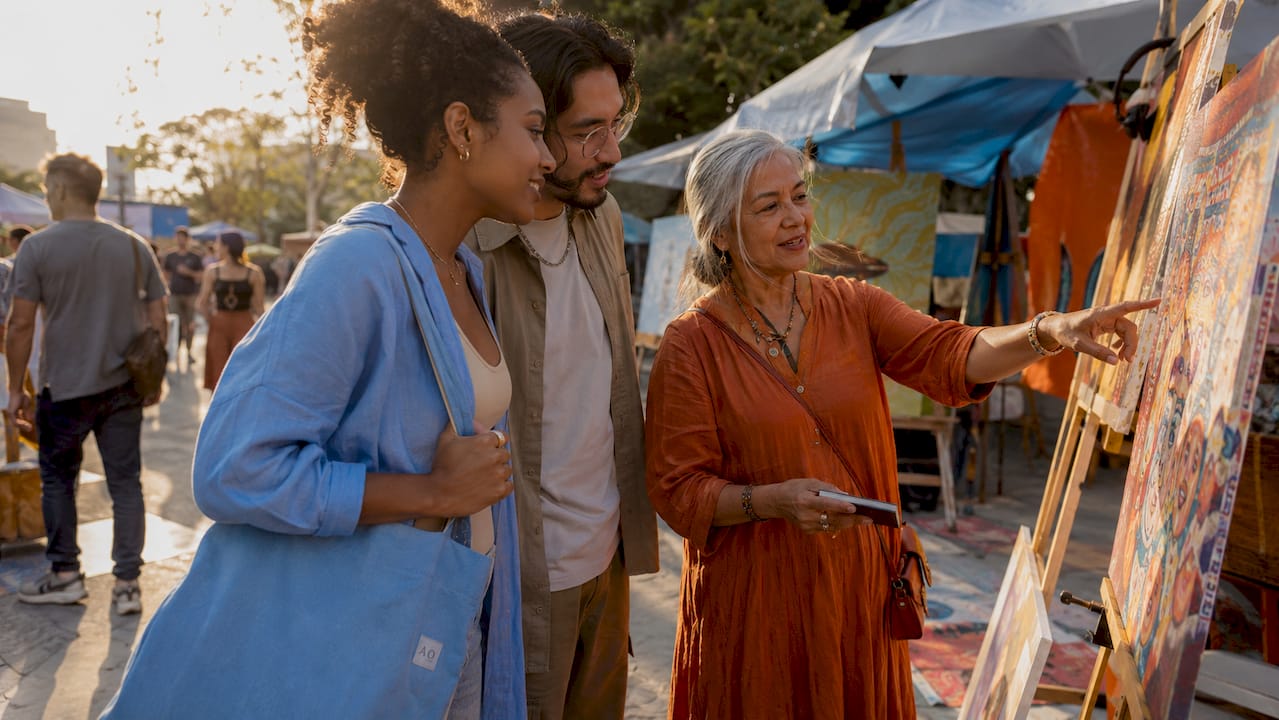
Phenomenological and cognitive research supports this dual function. Art gives form to experiences that resist verbal description. That is not a poetic claim. It is a functional one.
How does art express identity beyond language?
Language has limits. Art does not share all of them. Arts-based methods like collage allow exploration of repressed or neglected identity facets that traditional verbal accounts cannot access. This is what researchers call sui generis cognition: a form of knowing that is unique to the visual and tactile process of making art. It bypasses the filters that language imposes.
Consider what happens when a third culture kid, someone raised between two or more cultures, tries to explain their sense of self in words. The explanation often falls flat. Visual arts education significantly aids these individuals in developing clearer self-identity and confidence by exploring childhood memories through image-making. The process works because pictures hold contradictions that sentences cannot.
Collage, in particular, functions as a direct window into the artist’s inner life. When you cut and reassemble images, you make choices that your conscious mind does not fully control. Engaging with unconscious material through abstract visual methods transforms what researchers call “dark objects,” repressed or painful experiences, into visual narratives. This non-linear process enables a depth of self-articulation that talking about yourself rarely achieves.
- Collage and assemblage surface identity layers that verbal self-reflection misses entirely.
- Self-portraiture forces confrontation with how you see yourself versus how others see you.
- Cultural symbol work lets you reclaim or reframe inherited imagery on your own terms.
- Abstract mark-making externalizes emotional states that have no precise name.
Pro Tip: If you feel stuck trying to articulate who you are, skip the journal entry. Make a collage from old magazines, family photos, and found objects. The choices you make will tell you something words would not.
How does contemporary identity art function as a political practice?
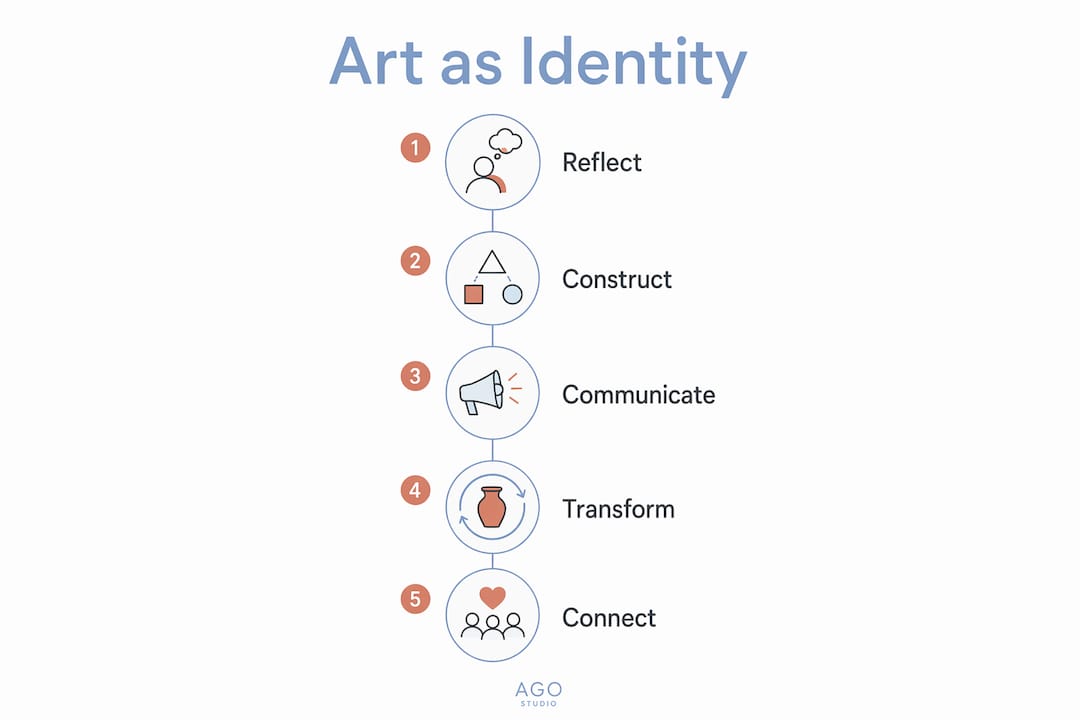
Modern identity art is not a fixed or private act. It is dynamic, relational, and often explicitly political. Contemporary identity art uses autobiographical and cultural symbols to challenge dominant social narratives. Artists working in this space do not just express who they are. They push back against who society says they should be.
This dual role, aesthetic creation and political statement, defines the genre. An artist from a diasporic community who incorporates traditional textile patterns into digital prints is doing two things simultaneously. She is honoring her heritage and asserting that heritage’s place in contemporary visual culture. Neither function cancels the other.
The most effective identity art tends to follow a recognizable pattern:
- Root in the personal. Start with a specific memory, object, or cultural symbol that carries genuine weight for you.
- Introduce tension. Place that personal element in dialogue with a broader social or cultural context that complicates it.
- Use hybrid iconography. Blend visual languages from different cultural traditions to reflect the complexity of a lived identity.
- Let the work be unresolved. Identity is not a solved problem. Art that pretends otherwise loses credibility.
- Invite the viewer in. The political dimension of identity art only activates when an audience engages with it.
“Art works as a mirror for both artist and audience, negotiating social interaction and cultural context.” — The Art Districts
Artists exploring race, sexuality, and diasporic experience have made this approach central to their practice. The work of artists who blend African, Caribbean, and Western visual traditions into single canvases is a clear example. The canvas becomes a site where cultural identity in art is not described but enacted.
Practical ways to use art for personal identity expression
You do not need a gallery show to use art as a tool for self-understanding. The practice works at any scale. The key is intentionality. You are not decorating. You are expressing your visual voice through deliberate choices about color, form, symbol, and material.
Start with autobiography. Pull out old photographs, letters, or objects that carry emotional weight. Use them as source material. An artist who grew up between Mexico and the United States might redesign the imagery of a traditional Day of the Dead altar using the color palette of American pop art. The result is not confusion. It is a precise statement about a dual inheritance.
Cultural motifs are particularly powerful starting points. When you take a symbol from your heritage and place it in a new context, you are not diluting it. You are extending it. Authentic identity expression emerges by hybridizing cultural dichotomies into unique contemporary aesthetic languages. That is a formal way of saying: your contradictions are your style.
- Use personal objects as subjects. A grandmother’s kitchen tool, a childhood toy, or a worn passport carry more identity weight than any abstract concept.
- Work in series. A single piece captures a moment. A series captures an evolution. Identity is not static, and your art practice should reflect that.
- Revisit the same subject repeatedly. Each return reveals something new about how your self-understanding has shifted.
- Combine cultural aesthetics deliberately. Choose which visual traditions you draw from and why. That choice is itself an identity statement.
Pro Tip: Before starting a new piece, write one sentence about what aspect of your identity you want to examine. You do not need to answer the question in the work. You just need to hold it while you make.
The role of art in self-expression extends beyond the studio. Choosing which art you hang in your home is also an act of identity declaration. The pieces you live with shape how you see yourself daily.
What are the real challenges in identity through artistic expression?
Identity art carries a genuine risk. When the subject is always yourself, the work can collapse inward. Narcissism in self-focused art is a recognized problem, not a moral failing but a craft failure. The fix is specific: use personal identity as a bridge to others, not as the destination. Successful self-portrait artists widen their subject scope to maintain viewer engagement.
| Challenge | What it looks like | How to address it |
|---|---|---|
| Inward collapse | Work that only makes sense to the artist | Introduce a universal emotional anchor |
| Cultural flattening | Reducing complex heritage to surface symbols | Research the full history of the symbols you use |
| Identity fixity | Presenting identity as settled and resolved | Build ambiguity and evolution into the work |
| Audience alienation | Work so personal it excludes everyone else | Find the shared human experience inside the specific one |
Artist Celia Paul describes the creative breakthrough in self-portraiture as prioritizing psychological truth over literal physical accuracy. The goal is not to look like yourself. The goal is to feel true. That distinction separates identity art that resonates from identity art that merely documents.
Identity crises are valuable opportunities for cultivating a singular and authentic artistic style. Artists who use the conflict between their upbringing and their current environment as creative fuel produce work that is genuinely original. The tension does not need to be resolved before you start making. The tension is the material.
Key Takeaways
Art as identity expression works because it gives form to the parts of yourself that language cannot hold, making it both a personal and cultural act.
| Point | Details |
|---|---|
| Art reflects and constructs identity | Making art does not just show who you are. It actively shapes your self-understanding. |
| Visual methods bypass language limits | Collage and abstract mark-making surface identity layers that verbal reflection misses. |
| Identity art is political | Contemporary artists use cultural symbols to challenge social narratives, not just express personal ones. |
| Tension is creative fuel | Identity crises and cultural contradictions produce the most authentic and original artistic styles. |
| Personal must connect to universal | The strongest identity art uses specific personal experience to reach shared human emotions. |
Why I think identity art is the most honest art form
I have spent years looking at art that tries to say something true. The work that stays with me is almost always the work where the artist had no choice but to make it. Not because it was therapeutic or cathartic, though it may have been, but because the subject demanded to exist as an image.
What strikes me most about identity art is how it exposes the gap between who we perform ourselves to be and who we actually are. That gap is where the most interesting work lives. The artists I find most compelling are not the ones who have figured themselves out. They are the ones who are willing to show the unresolved parts in full color.
The psychological truth argument, the idea that a self-portrait should feel true rather than look accurate, changed how I think about art and community. A painting that captures your emotional reality will connect with a stranger across the world more reliably than one that captures your physical appearance. That is not mystical. It is just how human recognition works.
My honest advice: do not wait until you have your identity sorted to make art about it. The sorting happens in the making.
— DAVID
Original art prints that reflect who you are
Art that reflects genuine identity does not belong only in galleries. It belongs in the spaces where you live and think.
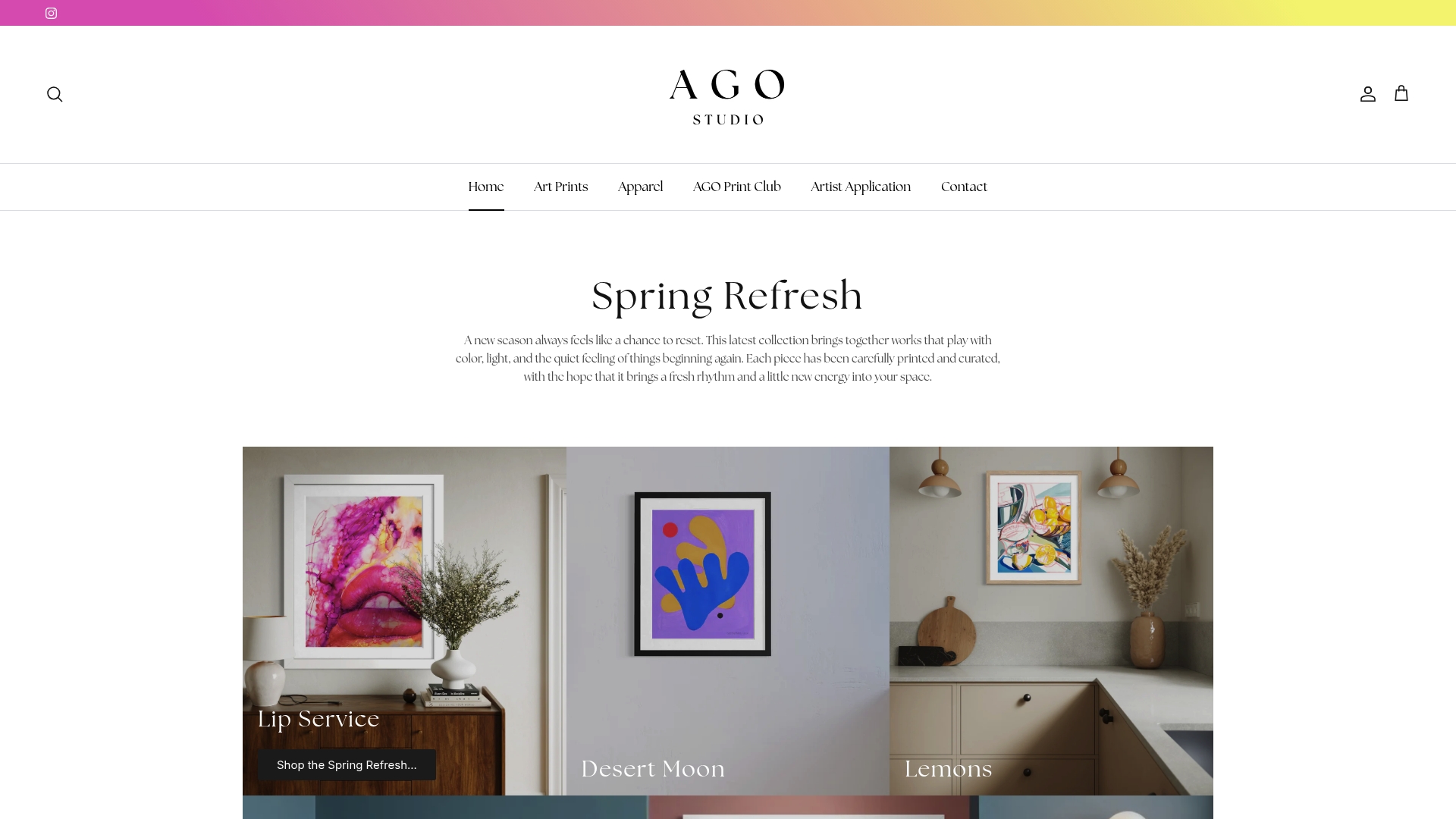
Agostudio curates original artworks selected specifically for their emotional authenticity and cultural depth. Each piece in the art prints collection is chosen because it carries the kind of psychological truth this article describes: work made by real artists who had something specific to say about who they are. For readers who want ongoing access to new work that reflects diverse identity themes, the Artist Print Club delivers curated prints from working artists on a regular basis. These are not decorations. They are conversation pieces that hold their own in any room.
FAQ
What is art as identity expression in simple terms?
Art as identity expression is the practice of using visual art to reflect, explore, and construct your personal and cultural identity. It goes beyond decoration to communicate who you are at a psychological and cultural level.
Can art express identity without words?
Yes. Arts-based methods like collage access repressed or complex identity facets that verbal accounts cannot reach, functioning as a form of cognition independent of language.
How does cultural identity show up in art?
Artists incorporate cultural symbols, traditional motifs, and hybrid iconography to express diasporic, racial, and community identities. These choices challenge dominant narratives and assert cultural presence in contemporary visual culture.
Is identity art always autobiographical?
Not strictly. Identity art draws on personal experience as a starting point, but the strongest work connects that personal experience to universal human emotions, making it relevant beyond the artist’s own story.
How do I start expressing my identity through art?
Begin with a specific personal object, memory, or cultural symbol that carries genuine weight for you. Use it as source material and place it in dialogue with a broader context. The tension that emerges is where your authentic visual voice begins.