

Original artwork is defined as a creation produced entirely by the artist’s hand, representing a unique physical object that no reproduction can replicate. Understanding what is original artwork separates a meaningful purchase from a decorative shortcut. A Certificate of Authenticity stating the artist’s name, title, medium, date, and edition information is the recognized standard for verifying this status in 2026. Tactile evidence like visible brushstrokes and physical texture confirms what documentation alone cannot. Agostudio curates pieces that meet exactly this standard, connecting buyers to art that carries real creative authorship.
What is original artwork, and how is it defined?
Original artwork is any piece created directly by the artist using their own hands, tools, and creative decisions. The term covers paintings, drawings, sculptures, and artist-approved prints. What separates an original from a reproduction is not just appearance. It is the physical record of the artist’s choices, embedded in the material itself.
The definition of original art has two layers. The first is uniqueness: a painting exists as one object in the world. The second is authorship: every mark was made by the artist, not a machine. Original art carries a living record of creative authorship that no reproduction can replicate. That distinction matters enormously when you are deciding what to hang on your wall or add to a collection.
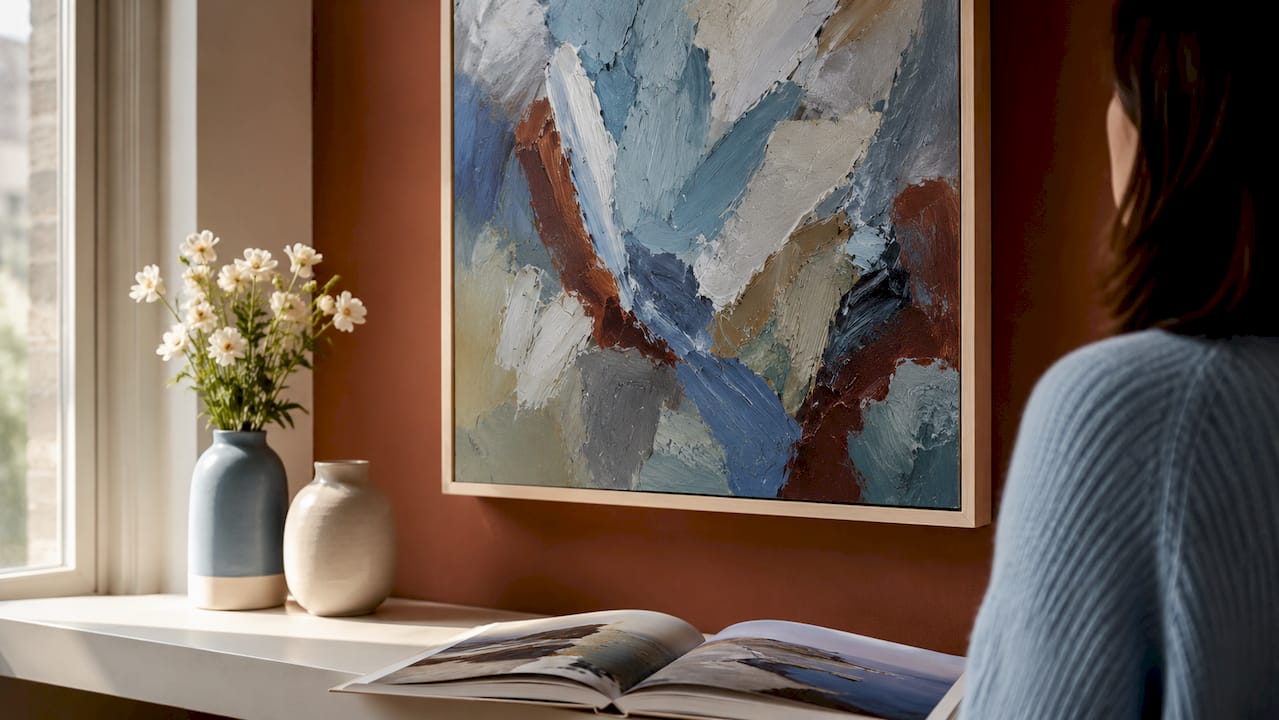
One common misconception is that “original” simply means “old” or “expensive.” Neither is true. A painting completed last week by an emerging artist qualifies as an original. A centuries-old poster print does not. The definition of original art is about process and authorship, not age or price.
What types of artwork qualify as original?
Original artworks fall into two broad categories: unique works and editioned originals. Both carry genuine artistic status, but they differ in how many copies exist.
Unique original works include:
- Oil and acrylic paintings on canvas or board
- Watercolor and gouache works on paper
- Drawings in pencil, ink, charcoal, or pastel
- Sculptures in clay, bronze, wood, or mixed materials
- Original photography prints made and signed by the photographer
Editioned original prints include:
- Etchings and engravings pulled from artist-made plates
- Lithographs produced from artist-drawn stones or plates
- Screenprints created through artist-controlled stencil processes
- Woodblock prints carved and printed by the artist
Original prints such as etchings, screenprints, and lithographs exist as multiple impressions but remain part of the artist’s authentic production. Each impression in a limited edition is considered an original because the artist directly controlled the printmaking process. An edition of 30 etchings means 30 originals exist, not one original and 29 copies.
The key distinction is artist involvement. Original prints are distinguished from reproductions through processes like etching, screening, or lithography that require the artist’s direct participation. A poster printed by a publisher from a digital scan of a painting is a reproduction, regardless of how limited the run is.
Pro Tip: When buying an editioned print, ask for the edition number written as a fraction (e.g., 7/30). The number before the slash is the impression number; the number after is the total edition size. Smaller editions generally carry more value.
How to identify if artwork is truly original
Identifying a genuine original requires both physical inspection and documentation review. Neither alone is sufficient.
Physical signs to look for:
- Visible brushstrokes or palette knife marks that create actual texture on the surface
- Variations in paint thickness across the canvas
- Evidence of layering, where earlier colors show through upper layers
- Slight irregularities in line work that machines cannot produce
- Canvas texture visible through the paint in thinly applied areas
Visible brushstrokes and physical texture are the primary indicators of a 100% hand-painted original as of 2026. Run your finger lightly along the surface of a painting. A genuine oil or acrylic original will have topography you can feel. A reproduction printed on canvas will feel flat and uniform.
Documentation to request:
- A Certificate of Authenticity with the artist’s name, title, medium, year, and edition details
- Provenance records showing the work’s ownership history
- Gallery or studio receipts
- Artist signature on the front or back of the work
Certificates and inspection of paint consistency and texture remain the most reliable verification tools in 2026. A COA without physical evidence is not enough. Sellers can issue fraudulent certificates. Physical texture is much harder to fake.
Watch out for misleading marketing language. Works described as “hand-embellished” or “limited edition giclée” are usually mechanically printed reproductions with minimal paint added. They do not qualify as fully hand-painted originals. The term “hand-embellished” means a machine did most of the work, and the artist added a few strokes afterward.
Pro Tip: Ask the seller to photograph the artwork at a raking angle, with light hitting the surface from the side. This technique reveals brushwork and texture that straight-on photos hide entirely.
For a deeper look at how originals compare to prints before you buy, the original vs. print guide from Agostudio covers the key decision points clearly.
How do originals differ from reproductions and prints?
The difference between an original and a reproduction is not always visible to the naked eye. That is exactly why buyers need to understand the underlying distinctions before spending money.
| Feature | Original artwork | Reproduction |
|---|---|---|
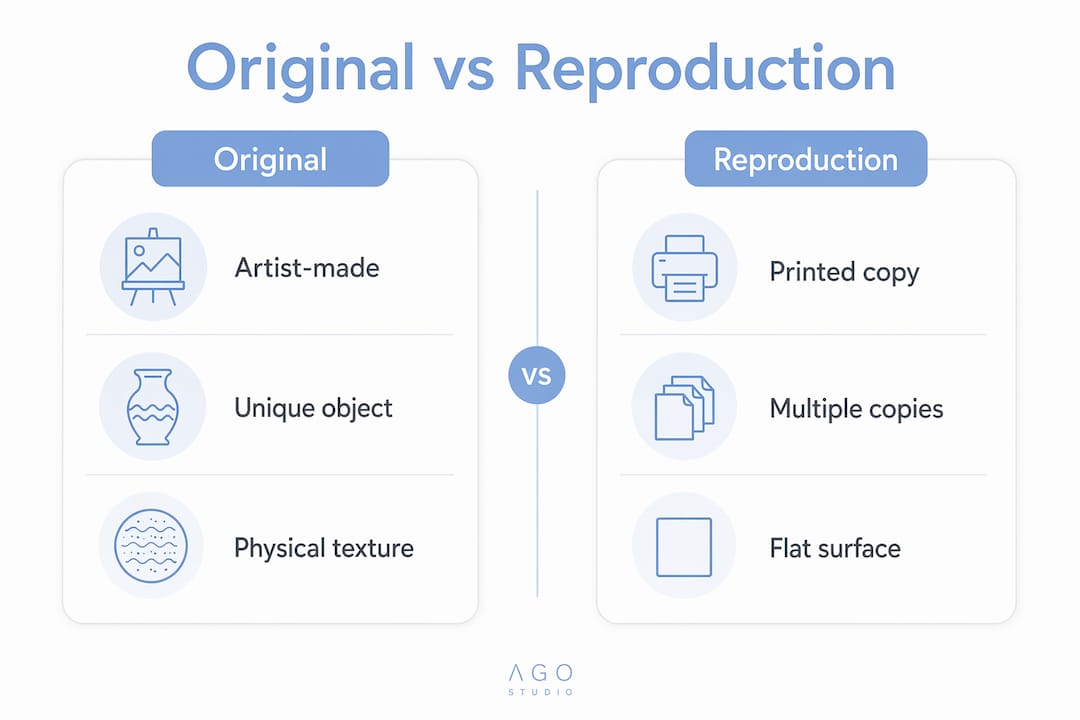
| Creation method | Made entirely by the artist’s hand | Mechanically printed from a digital or photographic source |
| Texture | Physical surface variation from tools and materials | Flat, uniform surface regardless of substrate |
| Uniqueness | One of a kind or limited artist-controlled edition | Unlimited copies possible |
| Documentation | Certificate of Authenticity with edition details | May carry a print certificate, but not an original COA |
| Market value | Appreciates based on artist reputation and rarity | Minimal resale value in most cases |
| Emotional weight | Carries the artist’s direct creative decisions | Visually similar but materially disconnected from the artist |
Reproductions may be visually faithful but do not share the same artistic status or market meaning as originals. A high-quality giclée print of a famous painting can look stunning on a wall. But it carries none of the materiality that makes the original significant. The paint layers, the texture, the physical record of the artist’s hand: all of that is absent.
The market reflects this difference clearly. Original artworks by established artists appreciate over time. Reproductions, even limited-edition ones, rarely hold value beyond their purchase price. That gap matters if you are buying art as both a personal statement and a long-term asset.
Why original artwork matters when buying for your home
Buying an original artwork is a different decision than buying a print or a poster. The reasons go beyond aesthetics.
- Emotional connection. Original art carries the artist’s unique creative process in its materials. When you live with an original, you share space with a real human decision made at a specific moment in time. That connection is not sentimental. It is material.
- Uniqueness in your space. No one else owns the same object. That fact changes how a room feels. Art that is one of a kind anchors a space in a way that mass-produced decor cannot.
- Investment potential. Collectors value original artwork for both personal connection and potential investment stability compared to volatile financial markets. Art as an investment is stable but less liquid and requires patience.
- Supporting independent artists. Buying an original puts money directly into an artist’s hands. It funds their next body of work. The impact of supporting independent artists extends well beyond the transaction itself.
- Conversation and meaning. Original artworks carry stories. The medium, the process, the artist’s background: these details give a piece depth that a reproduction simply cannot offer.
Understanding why art feels personal helps explain why originals affect viewers differently than prints. The physical presence of an original, its weight, texture, and scale, registers differently in a room and in memory.
Key Takeaways
Original artwork is defined by direct artist authorship and physical materiality, and no reproduction can replicate those qualities regardless of visual similarity.
| Point | Details |
|---|---|
| Definition of original art | Original artwork is created entirely by the artist’s hand, not reproduced mechanically. |
| Editioned prints qualify | Artist-controlled prints like etchings and lithographs are originals despite existing in multiples. |
| Verification requires two steps | Combine a Certificate of Authenticity with physical texture inspection to confirm originality. |
| Reproductions lack market value | Mechanically produced prints rarely appreciate and carry no original artistic status. |
| Buying originals has lasting impact | Originals support artists directly and offer emotional and potential investment value over time. |
What I’ve learned from years of looking at original art
The biggest mistake first-time buyers make is treating originality as a binary checkbox. They ask “is it original?” and stop there. The more useful question is “how original, and in what way?”
I’ve stood in front of paintings where the COA looked perfect and the brushwork looked wrong. I’ve also held prints that felt more alive than some paintings I’ve seen in galleries. The physical experience of an artwork tells you things that paperwork cannot. Trust your hands as much as your eyes.
First-time buyers also tend to underestimate how much an original changes a room. A reproduction fills space. An original claims it. There is a difference in presence that is hard to describe until you experience it yourself. Once you do, you understand why collectors keep buying.
The other thing I’d push back on is the idea that originals are only for serious collectors with large budgets. Emerging artists produce genuine originals at prices that compete with high-end reproductions. The difference is that the original will mean something in ten years. The reproduction probably won’t.
My honest advice: buy the piece that makes you stop. Not the one that matches your sofa. The art that earns a second look is the art worth owning.
— DAVID
Where Agostudio helps you find authentic originals
Agostudio curates original artworks and artist-approved print editions, each verified for authenticity and selected for the emotional weight they bring to a space.
Every piece in the art prints collection comes with provenance documentation and meets the physical and documentary standards described in this guide. For buyers who want ongoing access to limited-edition originals, the Agostudio Artist Print Club delivers curated editions with Certificates of Authenticity directly to members. Each selection reflects Agostudio’s focus on real artists and meaningful creative work, not mass-market decoration.
FAQ
What is the definition of original artwork?
Original artwork is a piece created entirely by the artist’s hand, using their own tools and creative decisions. It is distinct from any reproduction, copy, or mechanically produced print.
Can a print be considered original artwork?
Yes. Prints made through artist-controlled processes like etching, lithography, or screenprinting qualify as original artworks. Each impression in a limited edition is an original, not a copy.
How do I verify that a painting is truly original?
Request a Certificate of Authenticity and inspect the surface for physical texture, brushstrokes, and paint variation. Both steps together provide reliable verification.
What is a hand-embellished print, and is it original?
A hand-embellished print is a mechanically produced reproduction with minimal paint added by the artist afterward. It does not qualify as a fully original artwork.
Does original artwork hold its value better than reproductions?
Original artworks by recognized artists generally hold or appreciate in value over time. Reproductions rarely retain resale value beyond their original purchase price.