

Art connects people by activating shared emotional, neurological, and social mechanisms that exist in every human being, regardless of culture or language. This is not a poetic claim. Neuroscience, psychology, and social science all confirm that art and human connection are biologically and socially intertwined. Research from BMC Psychology links arts participation to measurable gains in psychological well-being. ISTAT data from Stornara, Italy shows that a community street art festival reduced youth out-migration by 37.7% between 2017 and 2022. Why art connects people is not a mystery. It is a documented, repeatable phenomenon rooted in how our brains and bodies respond to creative experience.
Why art connects people at a neurological level
The brain does not passively receive art. It responds to it physically. Shared artistic experiences synchronize physiological states among participants, including heart rate and breathing patterns. That synchrony triggers the release of oxytocin, the same hormone that drives trust and social bonding between people.
Neuroarts research confirms that collective art events regulate the nervous system and reduce the emotional distance between individuals. A concert audience, a theater crowd, or a group of people painting together are not just sharing space. They are sharing a biological state. That shared state is the foundation of genuine human connection.
The brain’s reward circuits also activate during art engagement. Dopamine, the neurotransmitter tied to pleasure and motivation, rises when people engage with music, visual art, or storytelling. This reward response reinforces the desire to return to shared artistic experiences. Over time, that repetition builds relationships.
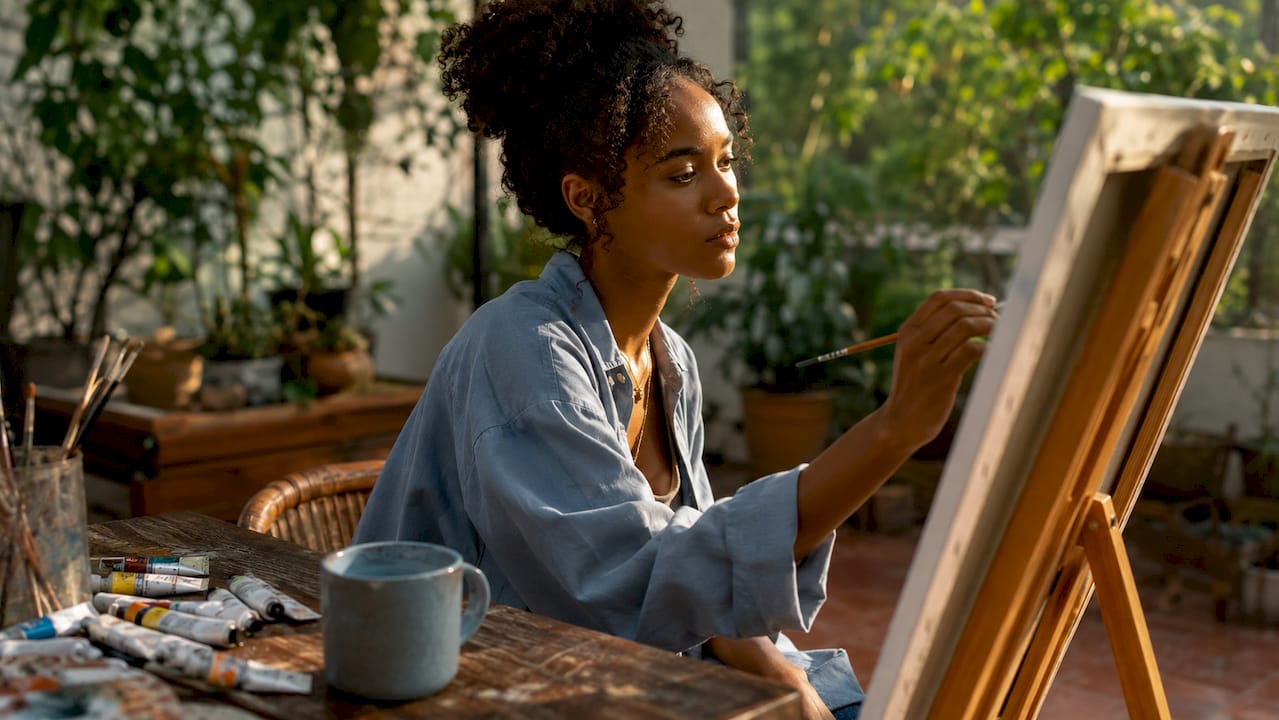
Pro Tip: Pay attention to your body the next time you attend a live performance or group art class. Notice if your breathing slows or your posture relaxes. That is oxytocin and nervous system synchrony at work.
Humans are biologically wired for these shared artistic moments. This is not a cultural preference. It is an evolutionary feature. Art has served as a mechanism for group cohesion since the earliest human communities, and the neuroscience simply confirms what those communities already practiced.
How does art improve mental health and social connection?
Art reduces cortisol, the body’s primary stress hormone, and increases dopamine. Active and passive arts engagement both activate brain circuits responsible for emotional regulation. The distinction matters: you do not need to be a skilled artist to benefit. Viewing a painting, listening to music, or watching a dance performance all produce measurable physiological changes.
Social isolation carries a health risk comparable to smoking 15 cigarettes per day. That comparison reframes isolation as a clinical problem, not a personal preference. Healthcare providers now use group arts activities through social prescribing programs to address this risk directly. Patients are referred to choirs, pottery classes, and community murals instead of, or alongside, traditional therapy.
Arts-based social prescribing bypasses the stigma that often prevents people from seeking mental health support. Programs like Art Pharmacy offer creative engagement as a non-clinical pathway to connection and well-being. The approach is personalized, low-barrier, and effective for people who would never walk into a therapist’s office.
The mental and social health benefits of arts participation include:
- Reduced cortisol levels from even brief creative engagement
- Increased dopamine that reinforces positive social behavior
- Improved emotional regulation through expressive and receptive art experiences
- Lower social isolation via group-based creative programs
- Greater psychological well-being, mediated by high emotional intelligence developed through arts participation
Engaging in creativity is not a luxury. It is a physiological investment that pays dividends in both mental and physical health. The science on this point is consistent and growing.
What role does community art play in building social cohesion?
Community art builds collective identity by giving people a shared story. The ISTAT data from Stornara is striking: youth out-migration fell by 37.7% in the five years after a community street art festival took root. Young people chose to stay because the town had become a place worth belonging to. That is the cultural significance of art expressed in demographic data.
Public artworks become tied to community identity through ongoing engagement. A mural painted once and left alone fades in meaning. A mural created with community input, revisited through events, and woven into local storytelling becomes a landmark. Successful community art depends on building long-term trust through shared time, not short-term program delivery.
The table below summarizes the documented impacts of community art programs on social outcomes.
| Community art impact | What the evidence shows |
|---|---|
| Youth retention | A 37.7% drop in out-migration in Stornara after a street art festival |
| Social cohesion | Group arts activities balance traditional values and individual expression |
| Mental well-being | Arts participation raises psychological well-being through emotional intelligence |
| Community identity | Public art embedded in local life becomes a source of pride and belonging |
| Isolation reduction | Social prescribing programs use group arts to counter clinical-level isolation |
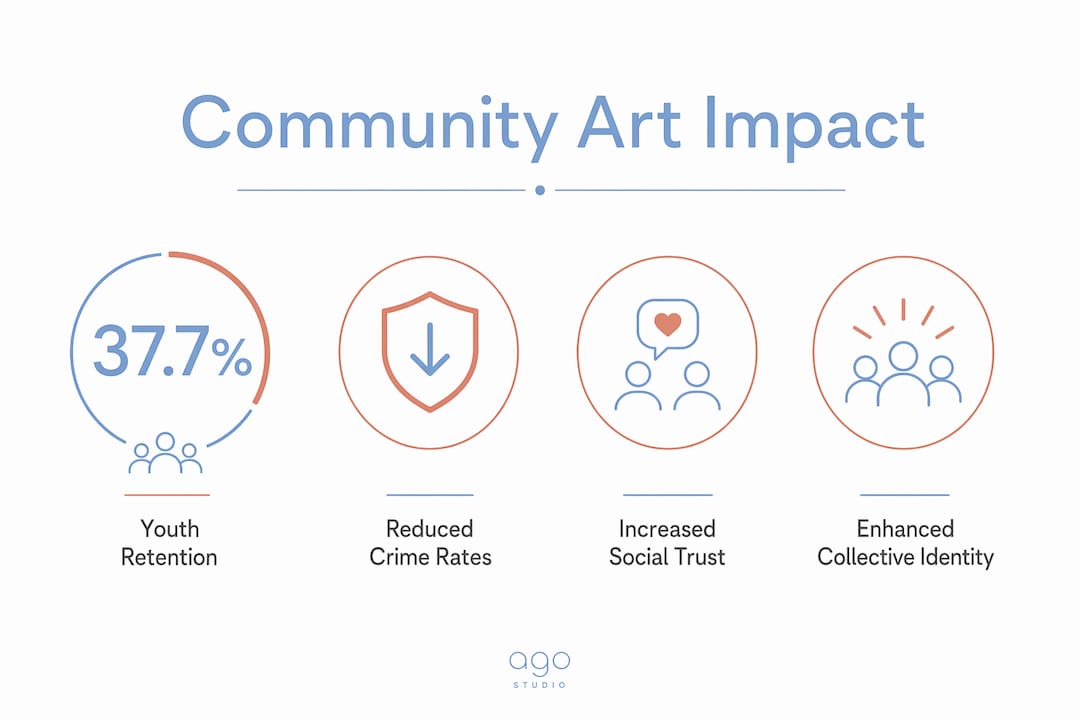
One-off events generate excitement. Sustained programs generate trust. The difference between a community that uses art as decoration and one that uses it as infrastructure is the depth of that trust. Art connecting communities requires patience, not just creativity.
How does art serve as a universal language?
Art is a form of nonverbal communication that carries emotional meaning across cultural and linguistic boundaries. A photograph of grief, a melody of longing, or a sculpture of joy does not require translation. The emotional resonance of art crosses borders because the emotions themselves are universal.
Shared artistic rituals support social bonding in every known culture. Storytelling, music, dance, and visual art appear in every human society without exception. Recognizing everyday activities like food preparation and folk arts and crafts as art reveals how deeply embedded creative expression is in daily social life. These are not peripheral activities. They are the connective tissue of communities.
The table below compares how different art forms support connection across cultural contexts.
| Art form | Primary connection mechanism | Cultural context |
|---|---|---|
| Music | Physiological synchrony, shared rhythm | Universal, from folk to classical |
| Visual art | Emotional resonance, shared aesthetic experience | Cross-cultural, gallery to street |
| Storytelling | Shared narrative, empathy activation | Oral traditions worldwide |
| Dance | Bodily synchrony, collective movement | Ritual and social celebration |
| Food preparation | Sensory ritual, communal participation | Domestic and ceremonial |
Artistic expression and empathy are directly linked. When you engage with a work of art that reflects an experience different from your own, your brain activates the same neural pathways as if you were living that experience. This is the mechanism behind art’s capacity to build understanding across difference. It does not require agreement. It requires only attention.
Pro Tip: When you encounter art from a culture unfamiliar to you, resist the urge to analyze it immediately. Sit with the feeling it produces first. That feeling is the connection.
Key Takeaways
Art connects people through shared biological, psychological, and social mechanisms that operate across all cultures and contexts.
| Point | Details |
|---|---|
| Biological synchrony | Shared art experiences synchronize heart rate and breathing, releasing oxytocin for social bonding. |
| Mental health benefits | Art reduces cortisol, raises dopamine, and supports emotional regulation in both active and passive engagement. |
| Community cohesion | Sustained community art programs build trust and identity, as shown by a 37.7% drop in youth out-migration in Stornara. |
| Universal language | Art communicates emotion across cultural and linguistic barriers through nonverbal, shared human experience. |
| Social prescribing | Healthcare providers now use group arts activities to combat isolation, which carries health risks equal to heavy smoking. |
Art is relational, not just decorative
I have spent years watching people stand in front of paintings and say, “I don’t know why, but this one gets me.” That phrase is the whole argument. They are not describing aesthetic preference. They are describing recognition. The painting reflects something true about their experience, and for a moment, they feel less alone.
The mistake most people make is treating art as a product to be consumed rather than a process to be shared. Art as process nurtures the kind of attention and care that commercial culture rarely rewards. When you make something with your hands, or sit with a work long enough to feel it, you are practicing a form of relational living. That practice matters.
The most powerful community art projects I have seen were not the most technically impressive. They were the ones where people showed up repeatedly, argued about meaning, and eventually built something that belonged to everyone. Flashy installations attract attention. Slow, consistent involvement builds belonging.
My honest advice: do not wait for a gallery opening or a formal program. The personal science behind art is already operating every time you cook a meal with someone, sing along to a song in a car, or hang a print that makes a room feel like yours. Art is already in your life. The question is whether you are paying attention to what it is doing.
— DAVID
Art that means something, right where you live
The research is clear: art in your environment changes how you feel and how you connect with others. A print on your wall is not just decoration. It is a daily invitation to feel something and to share that feeling with the people around you.
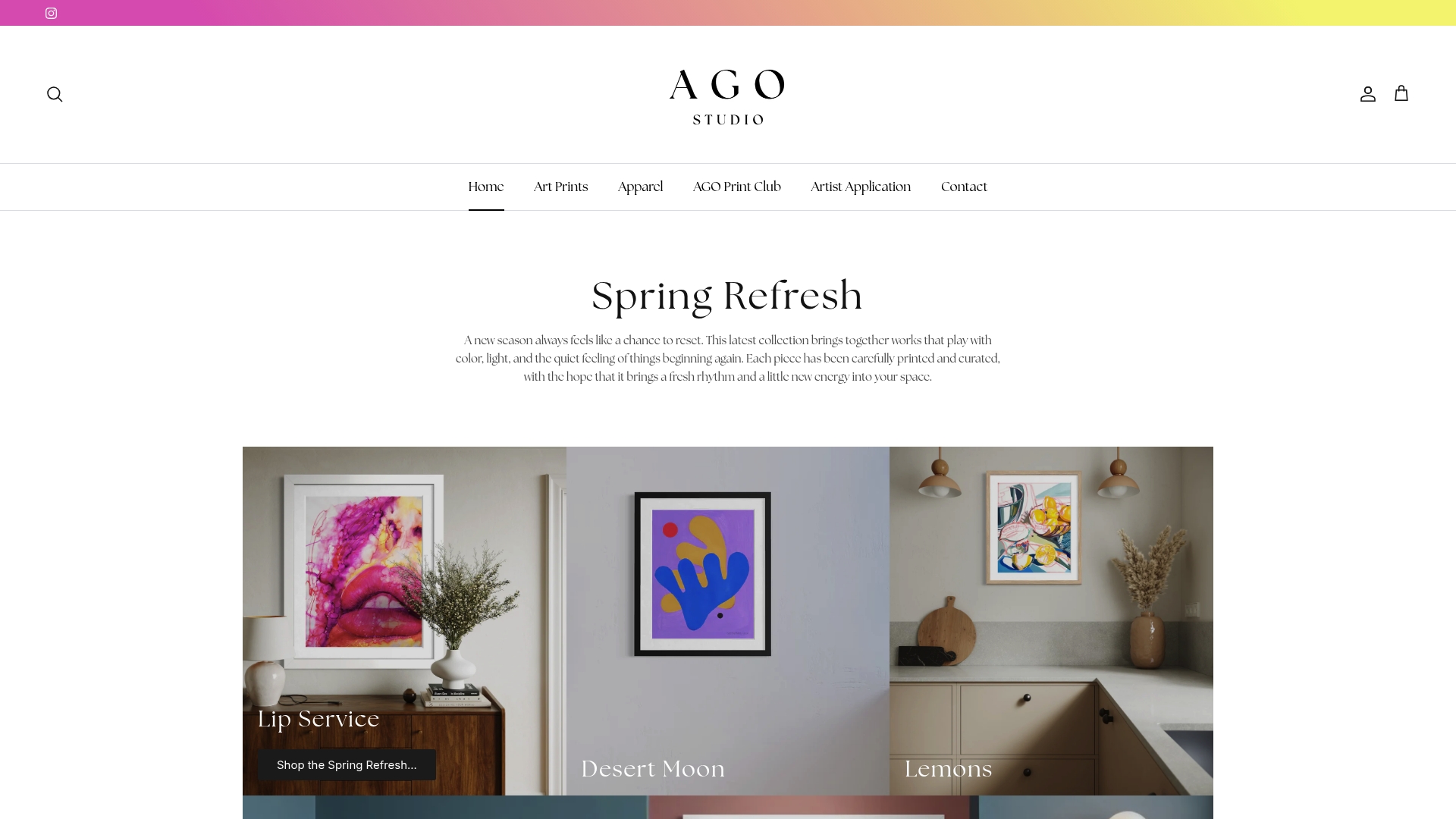
Agostudio curates original art prints selected specifically for their emotional resonance and authenticity. Every piece comes from a real artist with a real perspective, chosen because it evokes the kind of warmth and recognition that turns a room into a conversation. For readers who want ongoing engagement with curated work, the Agostudio Artist Print Club delivers new prints from emerging artists on a regular basis. It is a practical way to keep art active in your life, not just present.
FAQ
Why does art connect people emotionally?
Art activates the brain’s reward circuits and triggers oxytocin release during shared experiences, producing physiological states that mirror those of social bonding. This is a biological response, not a cultural one.
How does art bring people together in communities?
Community art programs build shared identity and trust over time. ISTAT data from Stornara, Italy shows youth out-migration dropped by 37.7% after a sustained community street art festival was established.
Can art improve mental health and reduce isolation?
Art reduces cortisol and increases dopamine, and group arts activities are now used in social prescribing programs to address social isolation, which carries health risks equal to smoking 15 cigarettes per day.
What makes art a universal language?
Art communicates through emotion rather than words, activating empathy and shared feeling across cultural and linguistic differences. Folk arts, music, storytelling, and visual art appear in every known human culture.
Does engaging with art require artistic skill to benefit from it?
No. Both active creation and passive engagement, such as viewing a painting or listening to music, activate brain circuits for emotional regulation and produce measurable mental health benefits.