

Studio art is defined by the artist’s own vision and intent, while commercial art is created to fulfill a client’s business objectives. That single distinction shapes everything: how the work is made, how it is judged, and what it means to the person who made it. Artists, students, and art enthusiasts who understand why studio art differs from commercial practice make sharper decisions about their careers, their collections, and their creative identity. The difference is not about quality or skill. It is about who authorizes the work and why.
Why studio art differs from commercial art: intent and purpose
The core difference between studio and commercial art is not skill but the constraints under which the work is created and authorized. Studio art is authorized by the artist’s personal vision. Commercial art is authorized by a client’s requirements and the need for message clarity.
Studio art embraces ambiguity. A painting by an independent artist may provoke ten different readings, and every one of them is valid. That openness is not a flaw. It is the point. The work invites sustained inquiry rather than a single, resolved conclusion.

Commercial art works in the opposite direction. A poster for a product launch, a brand identity system, or a packaging illustration must communicate one clear message to a defined audience. Commercial art aims to deliver that message without confusion. If the audience misreads the piece, the project has failed.
The practical consequences of this split are significant:
- Studio art gives the artist full control over subject, medium, scale, and meaning.
- Commercial art places control with the client, who defines the audience, the message, and the constraints.
- Studio art succeeds when it generates lasting cultural or emotional resonance.
- Commercial art succeeds when it drives a measurable business result, such as a sale, a sign-up, or a brand recognition lift.
- Studio art for profit vs self-expression is a false binary. Many studio artists sell their work. The distinction is that the work was made on the artist’s own terms first.
Pro Tip: If you are unsure which category your work falls into, ask one question: who had final say over the creative decisions? If the answer is you, it is studio art. If the answer is a client, it is commercial art.
How does the creative process differ between studio and commercial art?
Studio art follows the artist’s own schedule, instincts, and curiosity. There is no brief, no approval chain, and no deadline imposed from outside. An artist working in their studio chooses the subject, selects the medium, and decides when the piece is finished. That autonomy is both the freedom and the challenge of studio practice.
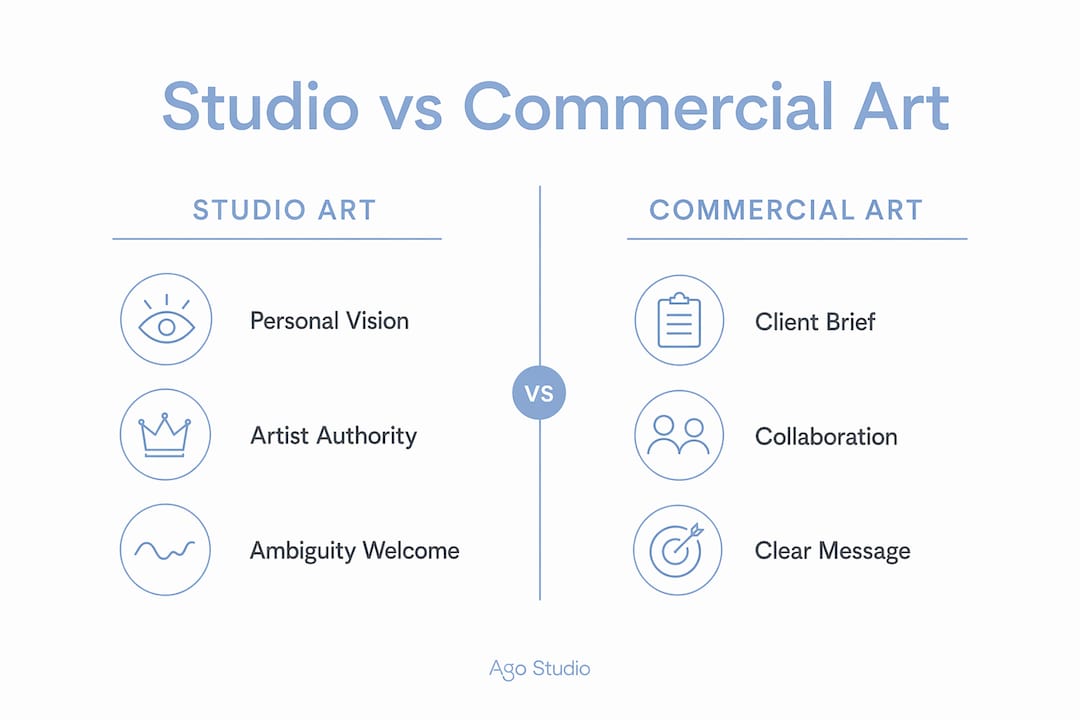
Commercial art operates through a structured workflow. Before a single mark is made, creative briefs define the objectives, messaging, audience, constraints, and deliverables. The strategic work is locked in early by a team. The creative task then focuses on execution within those defined parameters.
A typical commercial art project moves through these stages:
- Kickoff meeting. The client, art director, and creative team align on goals and audience.
- Creative brief. Objectives, key messages, timelines, and deliverables are documented in writing.
- Concept development. The artist or designer proposes visual directions that serve the brief.
- Revision rounds. Stakeholders review and approve work against the brief’s criteria.
- Final delivery. The finished piece is handed off for production or publication.
Commercial art involves collaboration across stakeholders including marketers, brand managers, and account teams. Studio art is typically a solitary, artist-led practice. That difference in collaboration structure changes how decisions get made and who bears creative responsibility.
Pro Tip: Artists moving from studio practice into commercial work for the first time should request a written brief before starting any project. A clear brief protects both the artist and the client from scope creep and misaligned expectations.
How is success measured differently in studio and commercial art?
The evaluation criteria for studio and commercial art are almost opposite, and confusing them causes real problems for artists.
Studio art success is measured by meaning, influence, and the artist’s ability to sustain an independent practice over time. A studio work that confuses its first audience but shapes a generation of artists twenty years later is a success by any serious measure. Richness of interpretation is a virtue, not a liability.
Commercial art is judged by effectiveness against marketing goals. Clarity of message, visual hierarchy, and audience comprehension are the primary criteria. If the audience misinterprets a commercial piece, it is treated as a failure, regardless of its aesthetic quality. That is a fundamentally different standard.
| Criterion | Studio art | Commercial art |
|---|---|---|
| Primary goal | Personal or cultural expression | Communicate a client’s message |
| Success measure | Meaning, influence, sustained practice | Audience comprehension, business result |
| Ambiguity | Valued and encouraged | Treated as a failure |
| Creative authority | Artist | Client and stakeholders |
| Audience expectation | Open interpretation | Single, clear takeaway |
This table shows why the same piece of work can be excellent studio art and a failed commercial project at the same time. The criteria simply do not overlap.
Can artists work across both studio and commercial art?
Many artists work fluidly across both fields, and the idea that commercial work is less artistic is a misconception. The distinction hinges on intent and context, not on quality or craft. A muralist who paints a commissioned wall for a corporation and also maintains a personal sketchbook practice is doing both, and neither undermines the other.
The real challenge is negotiating authority. Artists who straddle studio and commercial practice must manage two different sets of expectations about who controls the creative decisions. In a commercial project, the client holds that authority. In studio practice, the artist does. Blurring that line without clear communication leads to conflict.
Practical ways to navigate both worlds:
- Keep a personal studio practice running alongside commercial work. It protects your creative voice from being absorbed entirely by client demands.
- Be explicit with clients about what is negotiable and what is not. Some artists include a “creative latitude” clause in their contracts.
- Treat your studio art portfolio and your commercial portfolio as separate documents. They speak to different audiences with different expectations.
- Recognize that commercial constraints can sharpen your craft. Working within a tight brief forces clarity and economy of means that often improves studio work too.
The artists who thrive across both contexts are those who know exactly which hat they are wearing at any given moment.
Choosing studio art or commercial art as a career path
The practical differences between studio and commercial art translate directly into career decisions. Students choosing between fine art and design programs should consider whether they are drawn to expression or communication, and how they respond to constraints and deadlines. Those are not trivial preferences. They predict long-term satisfaction.
Studio art careers include independent practice, gallery representation, residencies, teaching, and artist collective membership. Income is often variable and built over years through reputation, exhibitions, and sales. The reward is creative autonomy and the ability to pursue a sustained personal vision.
Commercial art careers include illustration, graphic design, art direction, brand identity, packaging, and editorial work. Income is more predictable, tied to project fees or salaries. The trade-off is working within client constraints and shared creative authority.
Consider these questions before committing to a path:
- Do you feel energized or frustrated by a tight creative brief?
- Can you separate your personal aesthetic preferences from what a client needs?
- Do you want your income tied directly to your creative output, or do you prefer project-based fees?
- Are you building a body of work that reflects your own evolving ideas, or do you want to solve visual communication problems for others?
Neither path is superior. They require different temperaments, different skills, and different definitions of success. The role of self-expression in studio art is central and non-negotiable. In commercial art, self-expression is a tool in service of a larger goal.
Key Takeaways
Studio art and commercial art differ fundamentally in authorization: studio art is driven by the artist’s own vision, while commercial art is directed by client objectives, briefs, and measurable communication goals.
| Point | Details |
|---|---|
| Intent defines the category | Studio art is authorized by the artist; commercial art is authorized by a client brief. |
| Ambiguity vs. clarity | Studio art values open interpretation; commercial art treats audience misreading as failure. |
| Workflow structure | Commercial art follows briefs, timelines, and approval rounds; studio art is self-directed. |
| Success criteria differ | Studio art is judged by meaning and influence; commercial art by business effectiveness. |
| Career fit matters | Your response to constraints and deadlines is the most reliable guide to which path suits you. |
The line between studio and commercial art is real, but it is not a wall
I have watched artists tie themselves in knots trying to decide whether their work is “real” art because it was made for a client. That anxiety misses the point entirely. The distinction between studio and commercial practice is a tool for clarity, not a hierarchy of value.
What I have found, working with artists across both contexts, is that the most creatively fulfilled people are the ones who are honest about which mode they are in. When you take a commercial brief, you are a problem solver. When you step into your studio, you are the author. Both roles demand skill, discipline, and genuine creative investment.
The mistake is treating commercial work as a compromise of your artistic identity. It is not. It is a different discipline with different rules. The artists I respect most treat their commercial work with the same rigor they bring to their studio practice. They just know the criteria are different.
If you are a student trying to choose a path, stop asking which one is more legitimate. Ask which set of constraints makes you feel alive. That answer will tell you more than any curriculum guide.
— DAVID
Agostudio: where studio art principles come to life
Agostudio was built around one conviction: that art made from genuine personal vision deserves to be seen, collected, and lived with. Every piece in the collection reflects an artist’s independent creative authority, not a client brief.
Whether you are an artist looking for community or a collector seeking work that carries real meaning, Agostudio offers both. The curated art prints collection brings studio art principles directly into your space, with works selected for their emotional depth and authenticity. For collectors who want ongoing access to artist-driven work, the Artist Print Club offers a membership built around supporting independent artists and the studio practice that makes their work worth owning.
FAQ
What is the studio art definition?
Studio art is artwork created under the artist’s own creative authority, driven by personal vision rather than a client brief. The term distinguishes self-directed practice from commercial or applied art forms.
How does intent separate studio art vs commercial art?
Studio art is authorized by the artist’s personal vision and welcomes audience interpretation. Commercial art is authorized by a client’s objectives and requires clear, unambiguous message delivery to a defined audience.
Is commercial art less creative than studio art?
No. The distinction hinges on intent and context, not quality. Many skilled artists work across both fields, and commercial constraints can sharpen creative discipline.
What are the main commercial art characteristics?
Commercial art is defined by a client brief, a target audience, measurable communication goals, collaborative approval processes, and success criteria tied to business outcomes rather than artistic interpretation.
How do I choose between studio art and commercial art as a career?
Your response to deadlines and briefs is the most practical self-test. If tight constraints energize you, commercial art is a strong fit. If you need creative autonomy to do your best work, studio practice is the better path.